History of the devotion
History of the Holy Face Devotion
Devotion to the Holy Face has ancient roots in Christian love for the suffering Christ, but its modern form developed especially in nineteenth-century France and was renewed through saints and blesseds who preached reparation, Eucharistic love, and reverence for the Holy Name.
The Passion and Veronica’s Veil
The roots of Holy Face devotion are found first in the Passion of Christ. Christians have always meditated on the wounded humanity of Jesus because His wounds reveal the depth of divine love. The traditional story of St. Veronica gives this love a concrete image. As Jesus carried the Cross, Veronica compassionately wiped His suffering Face, and tradition says that His image remained upon her veil. This act, remembered in the sixth Station of the Cross, expresses the heart of Holy Face spirituality: to draw near when others mock, to console when others abandon, and to bear the likeness of Christ by love.
The Holy Face, therefore, is not a modern invention. It gathers ancient Christian contemplation of the Passion, the memory of sacred images, and the desire to repair offenses against the Lord.
Tours: Sister Marie of St. Peter and Leo Dupont
In the 1840s, Sister Marie of St. Peter, a Discalced Carmelite nun in Tours, France, recorded interior communications concerning reparation to the Holy Face and the Holy Name of God. She connected the devotion especially with blasphemy and the profanation of Sunday. The Golden Arrow Prayer became the central prayer of this mission, answering the “poisoned arrow” of blasphemy with praise, blessing, love, and adoration.
The devotion’s public spread was closely connected with Venerable Leo Dupont, known as the Holy Man of Tours. He kept a lamp burning before an image of the Holy Face in his home and welcomed pilgrims who came to pray. Reports of conversions and healings spread, and his home became a place of devotion. Leo shows that the Holy Face was not only a cloistered prayer, but a lay apostolate capable of renewing families, neighborhoods, and parishes.
Carmel, medals, religious life, and parish renewal
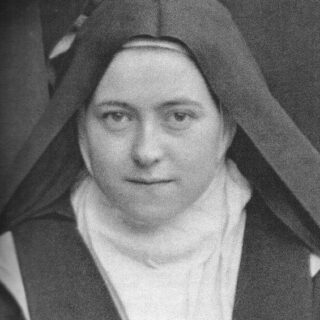
St. Thérèse of Lisieux received the Holy Face devotion in Carmel and made it part of her religious name: Thérèse of the Child Jesus and the Holy Face. She united the humility of the Child Jesus with the humiliation of the suffering Face, finding in both mysteries the language of divine love. Her Little Way was marked by hidden sacrifice, confidence, and the desire to console Jesus when He is ignored.
In the twentieth century, Blessed Maria Pierina De Micheli helped spread the Holy Face Medal, Blessed Maria Pia Mastena founded the Sisters of the Holy Face, and St. Gaetano Catanoso promoted the Holy Face through parish ministry, Eucharistic adoration, catechesis, and the Confraternity of the Holy Face. Together these witnesses show that the Holy Face devotion can be lived in every state of life: cloister, family, school, parish, and mission.
Why the devotion still matters
The history of the Holy Face devotion shows a repeated pattern. When the Church faces irreverence, unbelief, political upheaval, or spiritual coldness, God raises up witnesses who call souls back to the Face of Christ. Veronica teaches compassion, Sister Marie teaches reparation, Leo Dupont teaches lay perseverance, Thérèse teaches hidden love, and the twentieth-century apostles teach that the image of Christ must be restored in souls.
For modern Catholics, this history is not merely something to read. It is an invitation to take up the same work in homes, parishes, adoration chapels, schools, and online spaces: to honor the Holy Name, keep Sunday holy, console Jesus in His Passion, and help others seek His merciful Face.
Continue learning about the Holy Face
Return to the main Holy Face devotion page to explore the chaplet, novena, Veronica’s Veil, the Holy Face Medal, and the saints who promoted this devotion.
Sources and further reading
This Chasing Saints guide was written from a Catholic devotional perspective and is intended to be reverent, useful, and source-aware. Suggested sources for deeper study include:
- Holy See: Maria Pierina De Micheli beatification note
- Holy See: Maria Pia Mastena biography
- Holy See: St. Gaetano Catanoso biography
- Boston Carmel: St. Thérèse and the Holy Face
- The Holy Face Association: History of the devotion
- Sacred Heart Parish: Chaplet of the Holy Face
- EWTN Vatican: Veronica’s Veil and the Holy Face