Saint profile
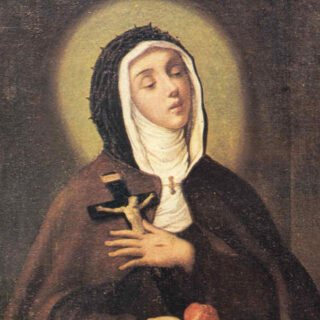
St. Humility of Faenza
c. 1226–1310
Associated with Religious; patronage includes Benedictine abbesses; humility.
Biography and devotion
St. Humility of Faenza: life, patronage, and devotion
St. Humility of Faenza was born Rosanna Negusanti in Faenza around 1226 and died in Florence on 22 May 1310. She was wife, mother, widow, recluse, abbess, founder of Vallumbrosan nuns, spiritual writer, and is honored as patron of Faenza. Her body is traditionally venerated as incorrupt.
Rosanna was born into a noble family and married Ugoletto dei Caccianemici while still young. The couple had children who died in infancy, a grief that marked the early years of her life. In time both husband and wife chose a more radical Christian path. Around 1250 they entered religious life in connection with a double monastery near Faenza. Rosanna took the name Humility, not as a poetic label but as a program for conversion.
She later lived as a recluse in a cell attached to the Vallumbrosan church of St. Apollinaris. Women were drawn to her example, and she became the spiritual mother of a community. In 1266 she founded a Vallumbrosan monastery outside Faenza, and in 1282 she founded another at Florence, dedicated to St. John the Evangelist. She governed with firmness and spiritual depth, shaping a female branch of Vallumbrosan life.
Humility was also a writer. Nine Latin sermons and lauds or verses in honor of the Virgin Mary are associated with her. This is remarkable for a medieval woman religious and shows that her authority was doctrinal and spiritual, not merely administrative. She died in Florence in 1310, and her relics were later translated to the Monastery of the Holy Spirit near Florence. Canonized in 1720, St. Humility’s life moved through marriage, bereavement, enclosure, foundation, teaching, and contemplative leadership, showing how a woman’s sanctity could build institutions and leave written spiritual doctrine.
Her survival as a female spiritual writer is especially important. The teachings attributed to her show that her authority was not merely administrative; she formed consciences. In Humility, the Church remembers a woman whose life moved from marriage to enclosure to leadership, without losing the thread of prayer that gave each stage its meaning.
At a glance
- Life dates
- c. 1226–1310
- Feast day
- May 22
- Patronage
- Benedictine abbesses; humility
- Incorrupt status
- Her body is traditionally venerated as incorrupt.
Relic in the Chasing Saints collection
A relic of St. Humility of Faenza is present in the Chasing Saints Relic Collection. Private registry details, certificate IDs, provenance notes, and storage information are intentionally not shown publicly.
Reported favors