Saint profile
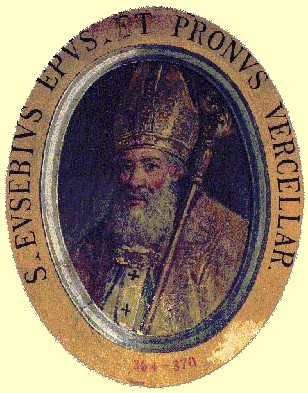
St. Eusebius of Vercelli
c. 283–371
Associated with Healing, Priests; patronage includes Bishop and confessor; patron of Vercelli..
Biography and devotion
St. Eusebius of Vercelli: life, patronage, and devotion
St. Eusebius of Vercelli was a fourth-century bishop, confessor, and defender of Catholic doctrine during the Arian crisis. Born in Sardinia around 283, he grew up in a Christian family, was educated at Rome, and became bishop of Vercelli in northern Italy around 340. He is patron of Vercelli and is remembered for joining pastoral leadership with a form of priestly common life that anticipated later clerical communities.
Eusebius governed at a time when the divinity of Christ was under fierce attack. Arianism did not deny that Jesus was exalted, but it refused the full confession that the Son is true God, consubstantial with the Father. Eusebius stood with St. Athanasius and other orthodox bishops in defending the faith of Nicaea. At the Synod of Milan in 355, pressure was placed on bishops to condemn Athanasius. Eusebius refused. For this resistance he was sent into exile.
His exile was severe. He was moved through places such as Scythopolis, Cappadocia, and the Thebaid, enduring hardship and humiliation while continuing to encourage the faithful by letters. Exile did not silence him; it purified his witness. After the death of Emperor Constantius, he returned to Vercelli and resumed his pastoral work.
Pope Benedict XVI noted that Eusebius founded at Vercelli a priestly community inspired by monastic ideals. His clergy lived together, sharing prayer, discipline, and pastoral mission. This was not withdrawal from the world but a way of forming priests whose lives could sustain orthodox teaching and evangelization among people still touched by paganism.
Eusebius died at Vercelli in 371. He is called a confessor because he suffered for the faith without dying by execution. His life is important because doctrine and holiness were inseparable for him. To defend the truth about Christ was not an academic exercise; it was the heart of worship, salvation, and pastoral charity.
The letters connected with his exile show how bishops of that era defended one another across long distances. Eusebius was not an isolated local pastor; he belonged to a network of Nicene confessors who understood that the faith of ordinary Christians depended on bishops willing to suffer rather than sign false formulas.
At a glance
- Life dates
- c. 283–371
- Feast day
- August 2
- Patronage
- Bishop and confessor; patron of Vercelli.
Relic in the Chasing Saints collection
A relic of St. Eusebius of Vercelli is present in the Chasing Saints Relic Collection. Private registry details, certificate IDs, provenance notes, and storage information are intentionally not shown publicly.
Reported favors