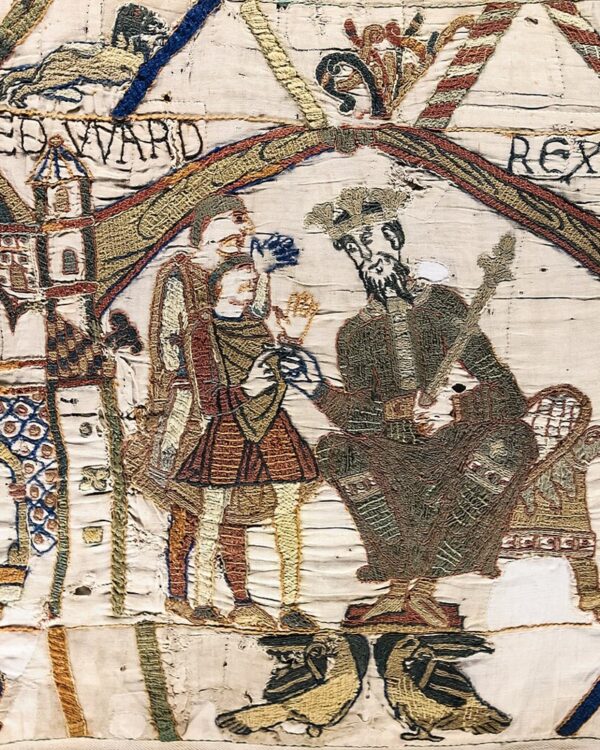
 Artwork: Bayeux_Tapestry_scene1_EDWARD_REX.jpg — Myrabella. Public domain; via Wikimedia Commons. Resized for display.
In Our Relic Collection
Saint profile
St. Edward the Confessor
1003–1066
Associated with Marriage; patronage includes Kings; difficult marriages.
Biography and devotion
St. Edward the Confessor: life, patronage, and devotion
St. Edward the Confessor was born around 1003, the son of King Æthelred the Unready and Emma of Normandy. He became king of England in 1042 and ruled until his death in 1066. He is patron of kings, difficult marriages, and England’s royal tradition, though his sanctity was remembered more for piety and justice than for military conquest.
Edward spent much of his youth in exile in Normandy during the Danish domination of England. This long displacement formed him in patience and gave him a strong attachment to monastic and liturgical life. When he was called to the English throne, he inherited a kingdom shaped by competing noble families, Danish influence, Norman connections, and fragile political loyalties.
His marriage to Edith, daughter of Earl Godwin, did not produce children, and medieval tradition remembered it as chaste. Whether every detail of that tradition can be historically measured, Edward’s reputation for purity, prayer, and restraint became central to his cult. He was known for generosity to the poor, reverence for the Mass, and a desire to govern peacefully.
One of his greatest works was the rebuilding of Westminster Abbey. The church was consecrated shortly before his death and became inseparable from English monarchy. Edward died on 5 January 1066 and was buried at Westminster. The political crisis after his death led to the Norman Conquest, but his memory remained that of a holy king whose reign pointed beyond worldly ambition.
Miracle stories gathered around his tomb. One famous tradition tells that he gave a ring to a poor pilgrim, who later revealed himself as St. John the Evangelist and returned the ring with a prophecy of Edward’s death. His relics were translated at Westminster, and he was canonized in 1161. St. Edward’s holiness is royal but gentle: kingship purified by prayer, mercy, chastity, and longing for the heavenly kingdom.
His death in 1066 came at the edge of a national catastrophe, yet his sanctity was remembered beyond political collapse. The translation of his relics at Westminster strengthened his cult, and English kings long looked to him as a model of sacred kingship under God.
The later translation of his relics at Westminster strengthened his cult, and English kings looked to his memory as a model of sacred kingship. His shrine survived as a focus of national and royal devotion.
At a glance
- Life dates
- 1003–1066
- Feast day
- October 13
- Patronage
- Kings; difficult marriages
Relic in the Chasing Saints collection
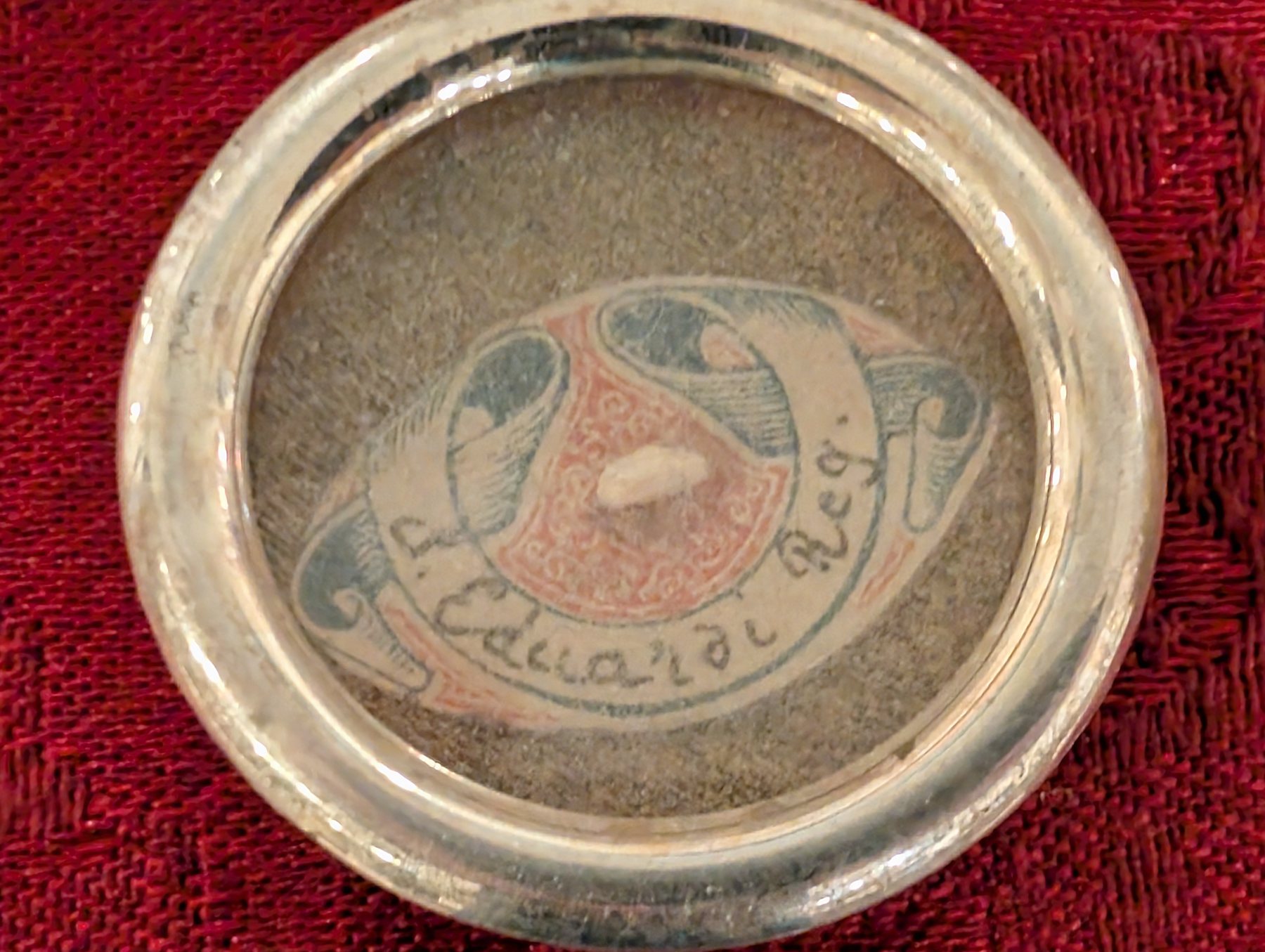
A relic of St. Edward the Confessor is present in the Chasing Saints Relic Collection. Private registry details, certificate IDs, provenance notes, and storage information are intentionally not shown publicly.
Reported favors