Saint profile
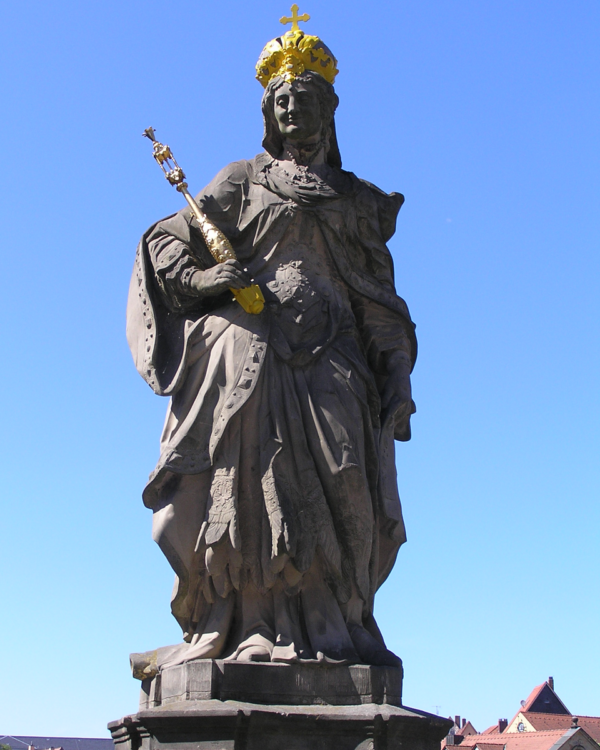
St. Cunigunde of Luxembourg
c. 975–1040
Associated with Family, Marriage; patronage includes Patron of Luxembourg, brides, childless couples..
Biography and devotion
St. Cunigunde of Luxembourg: life, patronage, and devotion
St. Cunigunde of Luxembourg was born around 975 and became Holy Roman Empress through her marriage to St. Henry II. She is honored as patron of Luxembourg, brides, childless couples, and those seeking fidelity in marriage. Her life joined royal responsibility, chastity, charity, and the founding of churches and monasteries.
Cunigunde came from a noble family and married Henry, Duke of Bavaria, who later became emperor. Medieval tradition says the two lived in continence by mutual consent, though historians discuss how literally this should be taken. What is clear is that their marriage was remembered as a partnership in Christian rule. Together they supported churches, monasteries, and reform.
As empress, Cunigunde was not simply ceremonial. She participated in imperial duties, interceded for subjects, supported ecclesiastical foundations, and helped sustain Christian life in the empire. One of the best-known stories about her concerns an accusation against her chastity. Tradition says she proved her innocence by walking unharmed over red-hot plowshares. This miracle became part of her iconography and a sign of purity vindicated by God.
After Henry’s death in 1024, Cunigunde withdrew increasingly from worldly power. She entered the Benedictine convent she had founded at Kaufungen and lived there in humility and penance, exchanging imperial splendor for religious simplicity. This final stage of her life completed the movement from throne to cloister.
She died in 1040 and was canonized in 1200 by Pope Innocent III. Her relics are venerated with St. Henry at Bamberg Cathedral. St. Cunigunde’s life is not a rejection of public responsibility. It shows that holiness can govern, build, protect, and then relinquish power. As empress and nun, she placed rank, marriage, wealth, and widowhood under the judgment of Christ.
Her burial at Bamberg beside St. Henry also matters. Together they represent one of the rare canonized married royal couples of the medieval West. Their sanctity was not domestic in a narrow sense; it touched monasteries, dioceses, imperial policy, and the poor. Cunigunde’s move to Kaufungen after widowhood gives the story its final shape. Having lived amid crowns and court life, she chose the veil, common prayer, and obedience, showing that earthly authority was never her final home.
The memory of Henry and Cunigunde together also gave medieval Catholics a model of holy rulership and holy marriage. Their support of Bamberg was not merely political patronage; it was a concrete investment in worship, clergy, education, and the poor. After Henry’s death, Cunigunde’s withdrawal to Kaufungen showed that her identity did not depend on imperial rank. The crown had been a responsibility, not the center of her soul. Her sanctity matured when she exchanged public honor for prayer and monastic humility.
At a glance
- Life dates
- c. 975–1040
- Feast day
- Mar 3
- Patronage
- Patron of Luxembourg, brides, childless couples.
Relic in the Chasing Saints collection
A relic of St. Cunigunde of Luxembourg is present in the Chasing Saints Relic Collection. Private registry details, certificate IDs, provenance notes, and storage information are intentionally not shown publicly.
Reported favors