Saint profile
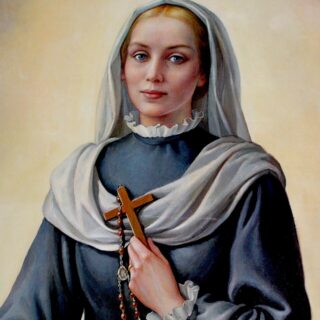
St. Brigid of Ireland
c. 451–525
Associated with Religious; patronage includes Ireland; nuns; dairy workers; the poor.
Biography and devotion
St. Brigid of Ireland: life, patronage, and devotion
St. Brigid of Ireland was born around 451, traditionally at Faughart near Dundalk, and is honored with St. Patrick and St. Columba as one of the principal patrons of Ireland. She is invoked as patron of Ireland, nuns, dairy workers, cattle, farmers, poets, the poor, and all who practice generous hospitality. Her early life is surrounded by traditions that emphasize one central truth: from childhood she gave herself away for Christ with a freedom that astonished those around her.
The old accounts say that Brigid was born to a Christian slave woman and a chieftain, and that her heart was drawn early to poverty, prayer, and consecrated virginity. She gave food, milk, clothing, and household goods to the needy with such abundance that her family feared she would empty the house. These stories are not merely decorative legends; they reveal the way Irish Catholic memory understood her holiness. She did not treat charity as a program. She saw the poor person before her and responded with the immediacy of the Gospel.
Brigid became a consecrated virgin, traditionally receiving the veil from St. Mac Caille or St. Mel. Her vocation soon grew into a public work for the Church. Around 480 she founded Kildare, whose name means “church of the oak.” The foundation became one of the great religious centers of early Christian Ireland. Tradition remembers it as a double monastery, with communities of women and men, learning, craftsmanship, worship, hospitality, and care for the poor. St. Conleth is associated with her as bishop of Kildare, helping the foundation become a center of ecclesial life as well as monastic prayer.
Many of the miracles connected with Brigid concern food, milk, animals, healing, protection, and the needs of ordinary households. In one famous story, she asked a ruler for land on which to build. When he refused, she asked only for as much ground as her cloak would cover. As her companions carried the cloak outward, it spread miraculously across a great tract of land, softening the ruler’s heart and securing space for her foundation. The story expresses Brigid’s whole charism: the poor needed room, and God made room through the faith of a woman who asked boldly.
Another beloved tradition tells of Brigid weaving a cross from rushes while speaking to a dying man about Christ. The St. Brigid’s Cross remains one of Ireland’s most familiar signs of Christian home devotion. Kildare was also associated with a sacred fire tended by her community, a sign of prayer, watchfulness, and the charity that should not grow cold. She died around 525, and devotion to her spread through Ireland and beyond. Her memory is practical and warm: a holy woman who governed, fed, healed, taught, and made the monastery a house of mercy.
At a glance
- Life dates
- c. 451–525
- Feast day
- February 1
- Patronage
- Ireland; nuns; dairy workers; the poor
Relic in the Chasing Saints collection
A relic of St. Brigid of Ireland is present in the Chasing Saints Relic Collection. Private registry details, certificate IDs, provenance notes, and storage information are intentionally not shown publicly.
Reported favors