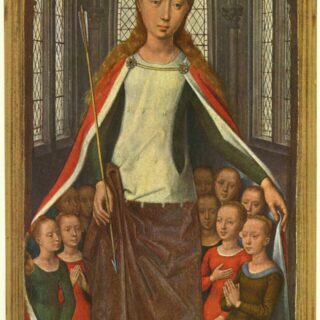
Saint profile
St. Liborius
d. 397
Associated with Protection, Priests; patronage includes Gallstones; kidney stones.
Biography and devotion
St. Liborius: life, patronage, and devotion
St. Liborius was a fourth-century bishop of Le Mans in Gaul and is one of the saints whose local episcopal memory later became part of a wide European devotion. He died around 397 and is honored as a patron against gallstones, kidney stones, and ailments of the urinary tract.
The early details of his life are not abundant, but his office as bishop places him in the age when the Church in Gaul was becoming more visibly organized after the persecutions. A bishop in this period had to preach, govern clergy, strengthen Christian worship, correct abuses, and care for the poor while pagan customs still lingered in many places. Liborius is remembered as a shepherd who guided the Church of Le Mans with firmness and charity.
His later fame came especially through his relics. In the ninth century, his remains were translated from Le Mans to Paderborn in Germany, creating a bond of friendship between the two cities that endured for centuries. The translation of relics was not simply ceremonial; it expressed the belief that the saints continue to intercede for the faithful and that local churches are united through the communion of saints.
Devotion to Liborius as a patron against stones developed from the healing graces attributed to his intercession. He is often depicted with small stones or with a peacock, an emblem connected with Paderborn tradition. Pilgrims came seeking help for painful illnesses, and his feast became an important celebration in the city.
St. Liborius represents the holiness of the early bishops whose personal stories are partly hidden but whose pastoral work bore lasting fruit. Through his relics and cult, a bishop of Le Mans became a heavenly patron far beyond his own diocese, especially for those suffering from painful bodily afflictions.
Because of the translation to Paderborn, his feast also became a civic and diocesan celebration. The bond between Le Mans and Paderborn helped preserve his memory not merely as a local bishop but as a saint whose relics created friendship between churches.
Because bodily pain from stones could be severe and frightening, this patronage became very personal. The faithful did not approach Liborius as a distant historical bishop only, but as an intercessor whose shrine had become associated with relief from a particular suffering.
At a glance
- Life dates
- d. 397
- Feast day
- July 23
- Patronage
- Gallstones; kidney stones
Relic in the Chasing Saints collection
A relic of St. Liborius is present in the Chasing Saints Relic Collection. Private registry details, certificate IDs, provenance notes, and storage information are intentionally not shown publicly.
Reported favors