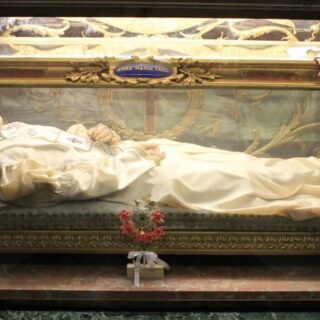
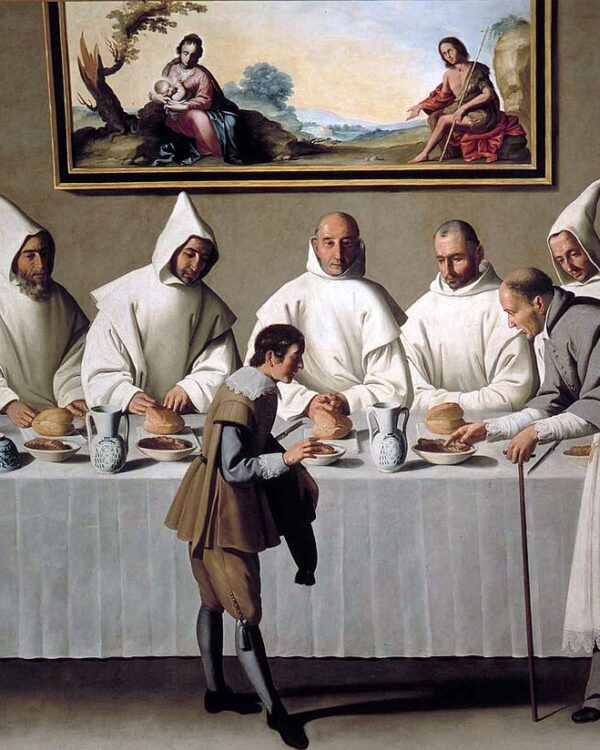
 Artwork: San_Hugo_en_el_Refectorio.jpg — Francisco de Zurbarán. Public domain; via Wikimedia Commons. Resized for display.
In Our Relic Collection
Saint profile
St. Hugh of Grenoble
1053–1132
Associated with Protection, Priests.
Biography and devotion
St. Hugh of Grenoble: life, patronage, and devotion
St. Hugh of Grenoble was born in 1053 at Châteauneuf in Dauphiné and died in 1132. He became bishop of Grenoble and is remembered as a reforming pastor, supporter of monastic life, and close friend of St. Bruno, founder of the Carthusian Order.
Hugh was chosen bishop while still young, during an age when many dioceses suffered from simony, lax clergy, and lay control of church offices. He attended the reforming circle around Pope St. Gregory VII and tried to bring the ideals of Gregorian reform into his diocese. Grenoble was poor and disordered when he arrived. Hugh’s first years were marked by discouragement, and he even withdrew for a time to monastic life, but obedience brought him back to his people.
His most famous act was welcoming St. Bruno and his companions in 1084. According to tradition, Hugh had a dream of seven stars leading to a remote valley in the mountains. When Bruno came seeking solitude, Hugh recognized the sign and gave the group land in the Chartreuse. There the Carthusian Order was born. The bishop who struggled under pastoral burdens thus became the protector of one of the Church’s most austere contemplative traditions.
Hugh governed Grenoble for more than fifty years. He defended the poor, corrected abuses, encouraged clergy, and supported monasteries while still suffering temptations to leave office for solitude. His friendship with Bruno shows the union of active and contemplative holiness: the bishop and the hermit needed one another. St. Hugh died in 1132 and was canonized soon after. His life is the story of a reluctant but faithful bishop whose perseverance helped reform a diocese and gave the Carthusians their mountain home.
His friendship with St. Bruno is one of the great providential meetings in monastic history. Hugh did not himself become a Carthusian, yet without his generosity the first Charterhouse would not have taken shape as it did. His sanctity therefore includes the humility of helping another vocation flourish for the good of the whole Church.
At a glance
- Life dates
- 1053–1132
- Feast day
- Apr 1
Relic in the Chasing Saints collection
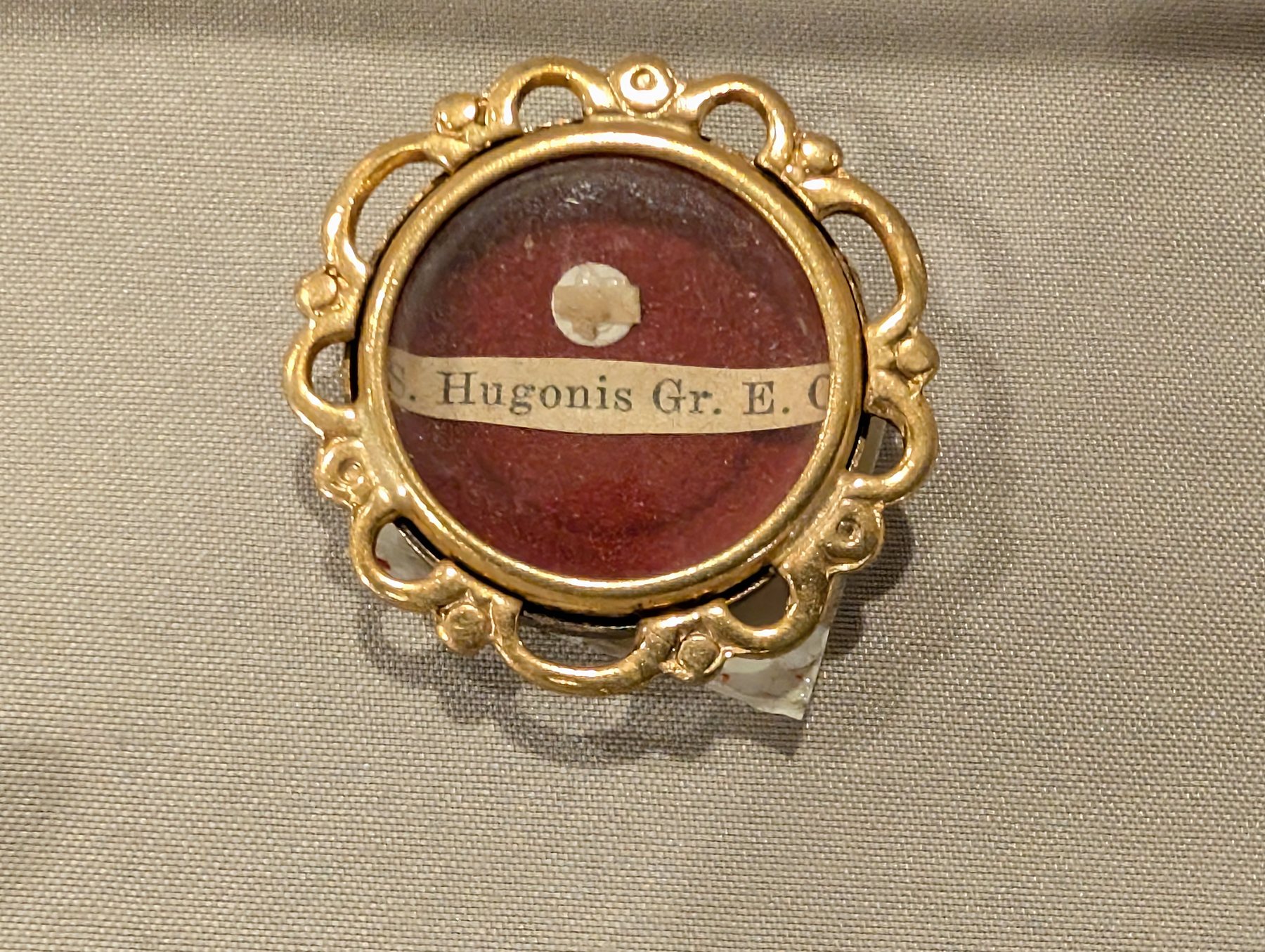
A relic of St. Hugh of Grenoble is present in the Chasing Saints Relic Collection. Private registry details, certificate IDs, provenance notes, and storage information are intentionally not shown publicly.
Reported favors