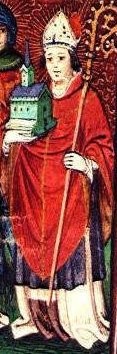
 Artwork: Saint Guislan.jpg — Unknown authorUnknown author. Public domain; via Wikimedia Commons. Resized for display.
In Our Relic Collection
Saint profile
St. Ghislain
d. 680
Associated with Saints, Martyrs, Doctors; patronage includes Childbirth; educators.
Biography and devotion
St. Ghislain: life, patronage, and devotion
St. Ghislain, also known as Gislenus or Guislain, was a seventh-century missionary, monk, hermit, and abbot associated with Hainaut in present-day Belgium. He died around 680, and the town of Saint-Ghislain preserves his name. He is invoked especially in difficult childbirth, children’s illnesses, and epilepsy, which was sometimes called St. Ghislain’s disease in older devotion.
The sources differ about his birthplace, sometimes placing him in Greece and sometimes in the Germanic world. What matters most in the tradition is his arrival in Hainaut as a man of prayer and missionary zeal. He lived as a hermit and gathered disciples, including Lambert and Berler, who are often remembered with him. His life was not solitary in a selfish sense; the hidden search for God became the seed of a monastic and missionary community.
Ghislain founded a monastery in the region, and around that foundation a town eventually grew. He preached, instructed the people, and helped Christianize a landscape where local communities needed stable worship, teaching, and pastoral care. A charming tradition calls him a friend of bears, a detail often found in early monastic stories where wild nature becomes peaceful around the saint.
After his death, devotion developed around his tomb and monastery. Parents and the sick invoked him, especially where children suffered illness or mothers feared dangerous labor. His cult was already known in the ninth century. St. Ghislain’s life belongs to the missionary-monastic pattern of early medieval Europe: a hermit arrives in a difficult place, prays, gathers disciples, founds a monastery, and leaves behind not a system but a Christian settlement shaped by worship and trust in God.
The town and monastery associated with him kept his name alive because his holiness became fixed in the landscape. A saint like Ghislain did not leave a large body of writings; he left a place changed by prayer. That concrete fruit—the formation of a Christian settlement around a hermit’s life—is the strongest testimony preserved by his cult.
At a glance
- Life dates
- d. 680
- Patronage
- Childbirth; educators
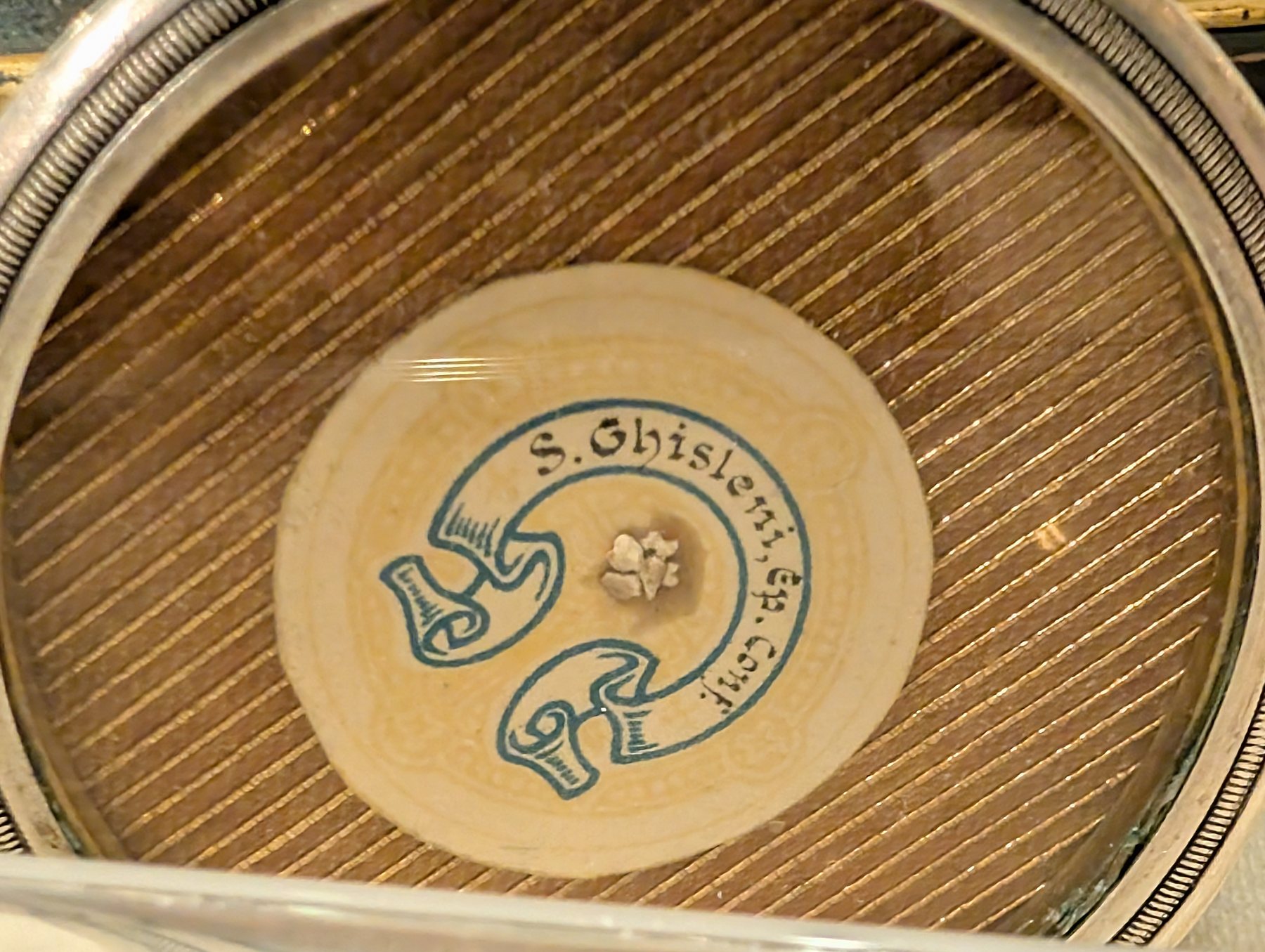
Relic in the Chasing Saints collection
A relic of St. Ghislain is present in the Chasing Saints Relic Collection. Private registry details, certificate IDs, provenance notes, and storage information are intentionally not shown publicly.
Reported favors