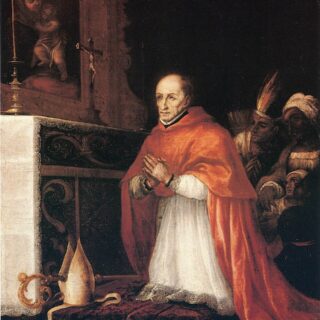
Saint profile
St. Cunibert of Cologne
c. 600–663
Associated with Healing, Priests; patronage includes Patron of Cologne..
Biography and devotion
St. Cunibert of Cologne: life, patronage, and devotion
St. Cunibert of Cologne was born around 600, probably into a Frankish noble family, and became one of the important bishops of the Merovingian period. He served as Bishop of Cologne and was involved in both ecclesiastical leadership and the political world of the Frankish kingdoms. His feast is traditionally kept on 12 November.
As a young man Cunibert was educated for service at court and in the Church. He became connected with King Dagobert I and other Frankish rulers, acting as counselor and administrator. In that age bishops often carried responsibilities that joined pastoral care, diplomacy, law, and protection of the poor. Cologne was a major city, and its bishop had to strengthen Christian life amid political instability.
Cunibert is remembered for building churches, organizing the diocese, supporting monastic life, and guiding the faithful. One of the most famous traditions says that a dove revealed the burial place of St. Ursula and her companions to him. This links him with the ancient martyr devotion of Cologne and with the growth of pilgrimage in the city.
He also played a role in the government of Austrasia, especially during the minority of King Sigebert III, serving with other leaders as a regent or chief adviser. This political role did not erase his episcopal identity; rather, it shows how bishops in the early Middle Ages often had to defend order, justice, and Christian life in societies where civil institutions were fragile.
Cunibert died around 663 and was buried in Cologne. The church of St. Kunibert became associated with his memory. Local devotion also remembers healings and favors through his intercession.
His life is important because it shows sanctity within responsibility. He was not a desert hermit or martyr but a bishop who had to govern, advise rulers, build churches, honor relics, and hold together a Christian people in a rough political age.
His era was also a time when saints were often builders of Christian memory. By supporting churches and honoring relics, bishops like Cunibert connected people to the martyrs and to the wider communion of the Church. Cologne later became famous for its treasury of relics and saints; Cunibert stands among the pastors who helped create that sacred identity. His biography is not filled with dramatic miracles, but it is filled with the work without which local Christianity cannot last: worship, order, teaching, and pastoral care.
At a glance
- Life dates
- c. 600–663
- Feast day
- Nov 12
- Patronage
- Patron of Cologne.
Relic in the Chasing Saints collection
A relic of St. Cunibert of Cologne is present in the Chasing Saints Relic Collection. Private registry details, certificate IDs, provenance notes, and storage information are intentionally not shown publicly.
Reported favors