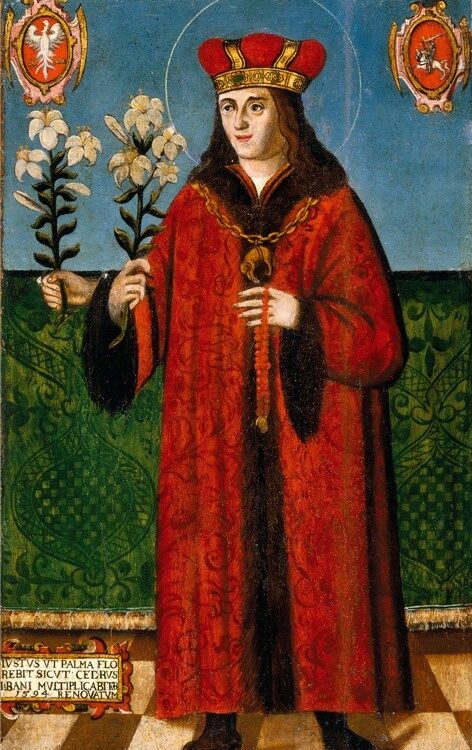
 Artwork: Šventasis_Kazimieras,_1520.jpg — Unknown authorUnknown author. Public domain; via Wikimedia Commons. Resized for display.
In Our Relic Collection
Saint profile
St. Casimir
1458–1484
Associated with Children; patronage includes Youth; Poland; Lithuania.
Biography and devotion
St. Casimir: life, patronage, and devotion
St. Casimir was born in 1458 at Kraków, the son of King Casimir IV of Poland and Grand Duchess Elizabeth of Austria. He was a prince of Poland and Lithuania, remembered for purity, prayer, justice, and special devotion to the Blessed Virgin Mary. His patronage includes Poland, Lithuania, young people, and those seeking chastity and integrity in public life.
Raised in a royal household, Casimir received a strong education and was trained for government. His tutor, the priest and historian Jan Długosz, helped form him in piety and learning. Although he was surrounded by courtly privilege, Casimir became known for simplicity, self-discipline, concern for the poor, and resistance to luxury. He slept little, prayed much, and preferred the company of churches and the needy to empty display.
As a young prince he was drawn into political affairs. In 1471, Hungarian nobles opposed to King Matthias Corvinus invited him to claim the Hungarian throne. Casimir obeyed his father and joined the campaign, but the effort failed. The experience seems to have deepened his reluctance toward ambition and war. Later, he assisted his father in government and became known for fairness, honesty, and refusal to use power for selfish ends.
His devotion to Mary became a defining feature of his sanctity. The hymn “Omni die dic Mariae,” often associated with him in tradition, expresses the Marian love for which he was remembered. He also had a deep reverence for the Eucharist and for prayer before the Blessed Sacrament. His holiness was not monastic withdrawal but princely responsibility purified by faith.
Casimir suffered from tuberculosis and died at Grodno in 1484, only twenty-five years old. His tomb in Vilnius became a place of devotion, and miracles were reported through his intercession. In 1604 his relics were solemnly elevated, and devotion to him spread strongly in Lithuania and Poland. He remains a rare example of royal sanctity: a young man who possessed rank, inheritance, and political promise, yet valued purity, justice, prayer, and mercy above the ambitions of a court.
A tradition says that when his tomb was opened in the early seventeenth century, his body was found incorrupt and a copy of his beloved Marian hymn was discovered with him. Devotion to him became especially important in Lithuania and Poland, where his purity, justice, and restraint offered a model of Christian nobility.
At a glance
- Life dates
- 1458–1484
- Feast day
- March 4
- Patronage
- Youth; Poland; Lithuania
- Incorrupt status
- Tradition holds that his body was found incorrupt when examined in connection with his cult.
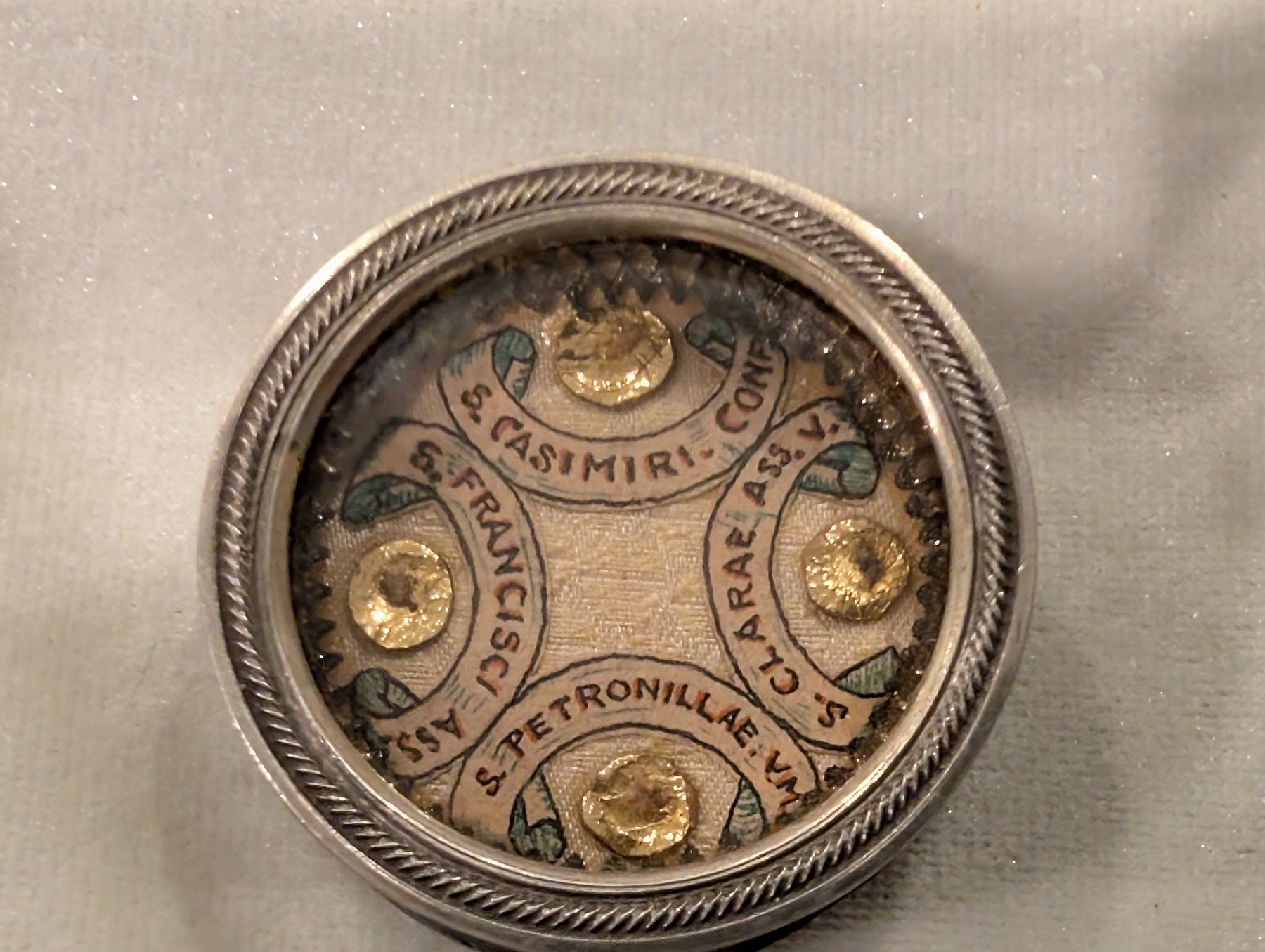
Relic in the Chasing Saints collection
A relic of St. Casimir is present in the Chasing Saints Relic Collection. Private registry details, certificate IDs, provenance notes, and storage information are intentionally not shown publicly.
Reported favors