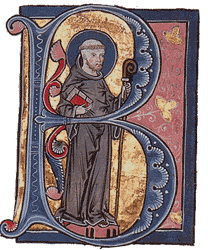
Saint profile
St. Bernard of Clairvaux
1090–1153
Associated with Healing, Saints, Students, Doctors; patronage includes Cistercians; beekeepers; candlemakers.
Biography and devotion
St. Bernard of Clairvaux: life, patronage, and devotion
St. Bernard of Clairvaux was born in 1090 at Fontaines near Dijon in Burgundy, into a noble family whose faith shaped his early life. He became a Cistercian monk, abbot, preacher, theologian, reformer, and Doctor of the Church. His patronage is often connected with beekeepers, candle makers, Cistercians, and those seeking a deeper love of Christ and the Blessed Virgin Mary.
In 1113 Bernard entered the young monastery of Cîteaux, bringing with him a remarkable group of relatives and companions. His arrival helped give new strength to the Cistercian reform, which sought simplicity, poverty, silence, manual labor, and a more literal observance of the Rule of St. Benedict. Only a few years later he was sent to found Clairvaux, where he became abbot and remained the spiritual father of a rapidly growing family of monasteries.
Bernard was not only a cloistered monk. Popes, bishops, kings, and cities sought his counsel. He defended Church reform, worked to heal schisms, preached vigorously, and became one of the most influential voices of twelfth-century Europe. His public role was not without controversy, especially in connection with the preaching of the Second Crusade, but his deepest identity remained monastic: a man formed by Scripture, liturgy, fasting, prayer, and love for Christ crucified.
His writings are among the treasures of medieval spirituality. The Sermons on the Song of Songs, On Loving God, On Consideration, and his Marian sermons reveal a theology that is never merely academic. Bernard wrote as a man who wanted souls to taste the sweetness of God. He emphasized humility, conversion of the heart, compunction, the humanity of Christ, and tender devotion to Mary. His preaching earned him the title Doctor Mellifluus, the “honey-sweet Doctor.”
Tradition remembers him as a miracle-worker and healer, especially during preaching journeys when the sick were brought to him for blessing. He also knew suffering personally: exhaustion, illness, disappointment, and the burdens of leadership. He died at Clairvaux in 1153 and was canonized in 1174. Bernard’s importance lies in the union of fire and discipline. He helped renew monastic life, shaped Catholic devotion to Christ and Mary, and showed that learning becomes holy when it leads the soul to love.
Many miracles were attributed to Bernard during his lifetime and after his death, especially healings connected with his preaching journeys and blessing. His reputation spread not only because he was eloquent but because people believed his words carried the power of a man deeply united to God. He died at Clairvaux in 1153, worn down by illness and labor for the Church.
At a glance
- Life dates
- 1090–1153
- Feast day
- August 20
- Patronage
- Cistercians; beekeepers; candlemakers
Relic in the Chasing Saints collection
A relic of St. Bernard of Clairvaux is present in the Chasing Saints Relic Collection. Private registry details, certificate IDs, provenance notes, and storage information are intentionally not shown publicly.
Reported favors