Saint profile
St. Arnulph of Metz
c. 582–640
Associated with Priests; patronage includes Patron of brewers..
Biography and devotion
St. Arnulph of Metz: life, patronage, and devotion
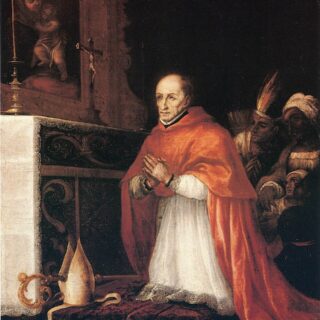
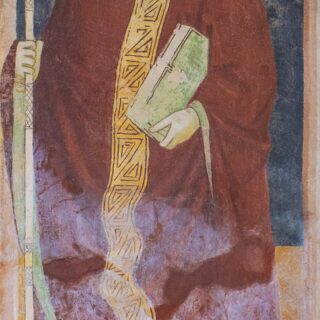
St. Arnulph of Metz, more commonly St. Arnulf of Metz, was born around 580 and died around 640. He is honored as a bishop, monk, widower, father, statesman, and patron of brewers. His life stands at the meeting point of Merovingian politics, family responsibility, episcopal service, and monastic withdrawal. Arnulf belonged to the Frankish nobility and served at the royal court. He married and had children; one of his descendants became part of the line from which the Carolingian rulers emerged. Yet he did not allow public office or family status to define the end of his life. Around 614 he became Bishop of Metz, a city of great importance in the Frankish realm. As bishop, he was known for reform, charity, and counsel. He supported Christian life in a world where political power and violence often threatened the Church’s freedom. After years of service, he withdrew from office and embraced a more penitential, monastic life near Remiremont, seeking solitude and prayer. Several miracle traditions surround him. One of the most famous is the “beer miracle.” During the translation of his relics, the people carrying them were thirsty and had little to drink. Through his intercession, the supply of beer was said to be miraculously renewed or multiplied, a story that helped establish his patronage of brewers. Other traditions remember him as a wonder-worker and protector. Arnulf died around 640. His relics were honored at Metz, and his memory remained important in both Catholic devotion and the history of the Frankish peoples. He is a saint for those who have known public responsibility, family life, and later conversion to deeper prayer. His biography shows that sanctity can move through court, household, episcopal office, and hermitage without losing its center in God.
His family connections also made him important after death. Through his descendants, Arnulph became an ancestor of the Carolingian dynasty, linking his memory with the Christian shaping of Western Europe. Yet the hagiographic portrait does not rest on bloodline alone. It rests on renunciation. After holding office and influence, he withdrew to a hermitage and gave himself to penance. The ring miracle expresses this movement: a powerful man asking God for mercy, then receiving a sign of forgiveness in a humble fish. This combination of public authority and final humility made him a compelling saint for rulers and pastors alike.
After his death, his relics were translated to Metz, deepening the city’s devotion to him. His descendants would become historically powerful, but his personal sanctity is found in the opposite direction: the man linked to dynasties chose, in the end, the smallness of a hermit’s life.
At a glance
- Life dates
- c. 582–640
- Feast day
- Jul 18
- Patronage
- Patron of brewers.
Relic in the Chasing Saints collection
A relic of St. Arnulph of Metz is present in the Chasing Saints Relic Collection. Private registry details, certificate IDs, provenance notes, and storage information are intentionally not shown publicly.
Reported favors