In Our Relic Collection
Saint profile
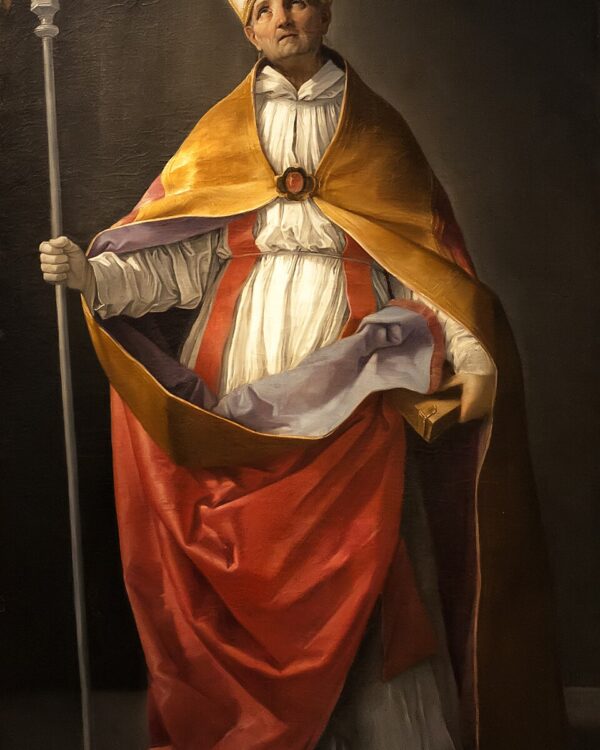
St. Andrew Corsini
1302–1373
Associated with Healing, Priests, Religious, Saints; patronage includes Carmelite bishop; peacemaker..
Biography and devotion
St. Andrew Corsini: life, patronage, and devotion
St. Andrew Corsini was born in Florence in 1302 into the powerful Corsini family. The traditional account says that his mother, before his birth, dreamed she had given birth to a wolf that entered a church and became a lamb. The image became a summary of his life: a young nobleman given to worldliness was changed by grace into a Carmelite, bishop, peacemaker, and servant of the poor. After a careless youth, Andrew entered the Carmelite Order. His conversion was serious. He embraced penance, study, prayer, and poverty, and his natural strength became disciplined by religious life. He was ordained a priest and became known as a preacher and spiritual director. Eventually he was chosen as Bishop of Fiesole, a responsibility he tried to avoid but accepted in obedience. As bishop, Andrew lived simply, cared for the poor, corrected clergy, preached to his people, and worked to heal divisions. Florence and the surrounding cities were often torn by factional violence, and he became known as a peacemaker. He was also sent as a papal legate to resolve civil conflicts, earning the title “Apostle of Florence.” Miracles were reported during and after his life. Carmelite and Florentine devotion also remembers his intercession in battle and civic danger, which helped make him a patron against civil disorder and riots. His holiness was not isolated from public life; it entered the difficult world of politics, poverty, and city conflict. Andrew died in 1373 at Fiesole. His body was later venerated in Florence, and he was canonized by Pope Urban VIII in 1629. His biography is a story of conversion from privilege into service, showing how a strong temperament can become a gift when surrendered to prayer, penance, and pastoral charity.
The Carmelite memory of Andrew also includes the vision of Our Lady before his birth, when his mother is said to have seen a wolf enter a church and become a lamb. The image became a symbol of his conversion. After death, Florence invoked him in battle and danger, and a victory attributed to his intercession strengthened civic devotion. His body was venerated in the Carmelite church of Florence, where he remained a local father to the city. The combination of reforming bishop and converted nobleman made him especially appealing to Christians who needed both personal conversion and public peace.
The local memory of Florence and Fiesole kept him as a saint who could calm civic disorder. That patronage matters because his age was not peaceful. Families, towns, and factions often fought violently, and Andrew’s holiness was expressed in the risky work of reconciling people who preferred revenge.
At a glance
- Life dates
- 1302–1373
- Feast day
- February 4
- Patronage
- Carmelite bishop; peacemaker.
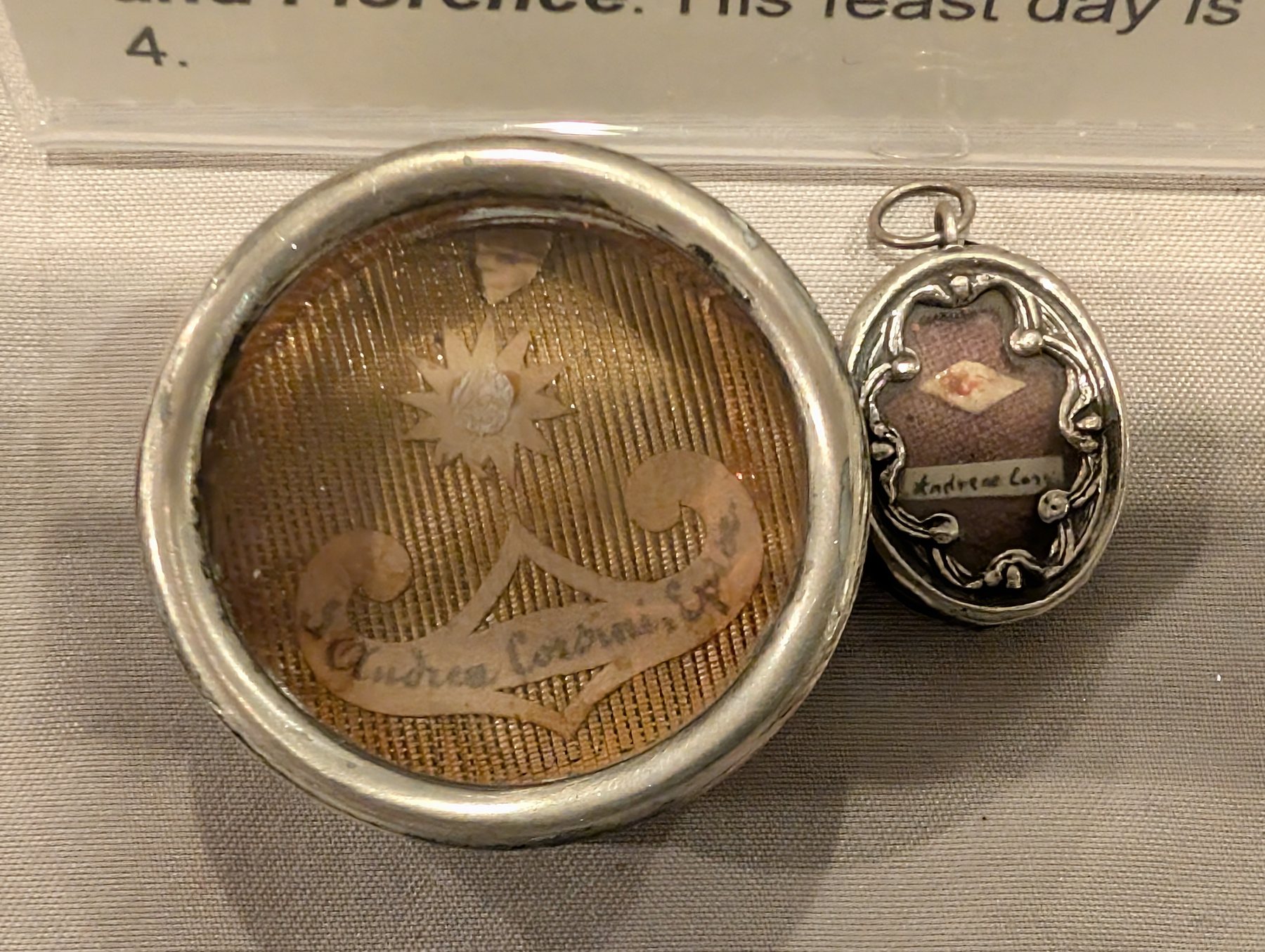
Relic in the Chasing Saints collection
A relic of St. Andrew Corsini is present in the Chasing Saints Relic Collection. Private registry details, certificate IDs, provenance notes, and storage information are intentionally not shown publicly.
Reported favors