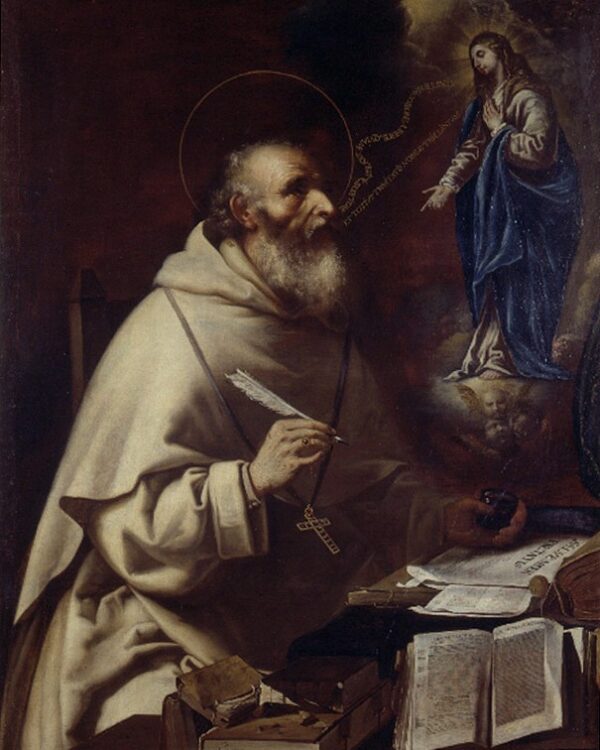
 Artwork: Vicente_salvador_gomez-san_alberto.jpg — Vicente Salvador Gómez. Public domain; via Wikimedia Commons. Resized for display.
In Our Relic Collection
Saint profile
St. Albert the Great
c. 1200–1280
Associated with Healing, Doctors, Priests; patronage includes Doctor of the Church; patron of scientists..
Biography and devotion
St. Albert the Great: life, patronage, and devotion
St. Albert the Great, also known as Albertus Magnus, was born around 1200 in Lauingen in present-day Germany. As a young man he entered the Order of Preachers, the Dominicans, and became one of the greatest scholars of the medieval Church. His mind ranged across theology, philosophy, Scripture, natural science, logic, ethics, and the works of Aristotle.
Albert taught in several centers of study, including Paris and Cologne. Among his students was St. Thomas Aquinas, whose gifts Albert recognized and defended when others underestimated him. Together they stand at the heart of Catholic scholastic theology, though Albert’s interests were even broader than those of many theologians of his age. He believed that truth discovered through reason and the study of nature could not ultimately contradict the truth revealed by God.
In 1260 he was appointed Bishop of Regensburg. The office was difficult and not suited to his scholarly temperament, but he accepted it in obedience. He later resigned and returned to teaching, preaching, and study. He also took part in Church affairs, defended the mendicant orders, and continued writing commentaries and treatises that influenced generations.
Albert’s writings are immense. He commented on Aristotle, Scripture, the Sentences, and many scientific subjects. His title “Doctor Universalis,” the Universal Doctor, reflects the breadth of his learning. Yet his scholarship was not curiosity detached from prayer; it was a search for the order God placed in creation.
He died in Cologne on 15 November 1280. Pope Pius XI canonized him and declared him a Doctor of the Church in 1931. St. Albert is patron of scientists, philosophers, students, and those who seek truth with both faith and reason.
His scientific interests included animals, plants, minerals, astronomy, and the observation of nature. That breadth made him a patron for Catholic scientists because he did not fear creation. He studied the world as something intelligible, ordered, and worthy of patient attention because it came from the Creator.
At a glance
- Life dates
- c. 1200–1280
- Feast day
- November 15
- Patronage
- Doctor of the Church; patron of scientists.
Relic in the Chasing Saints collection
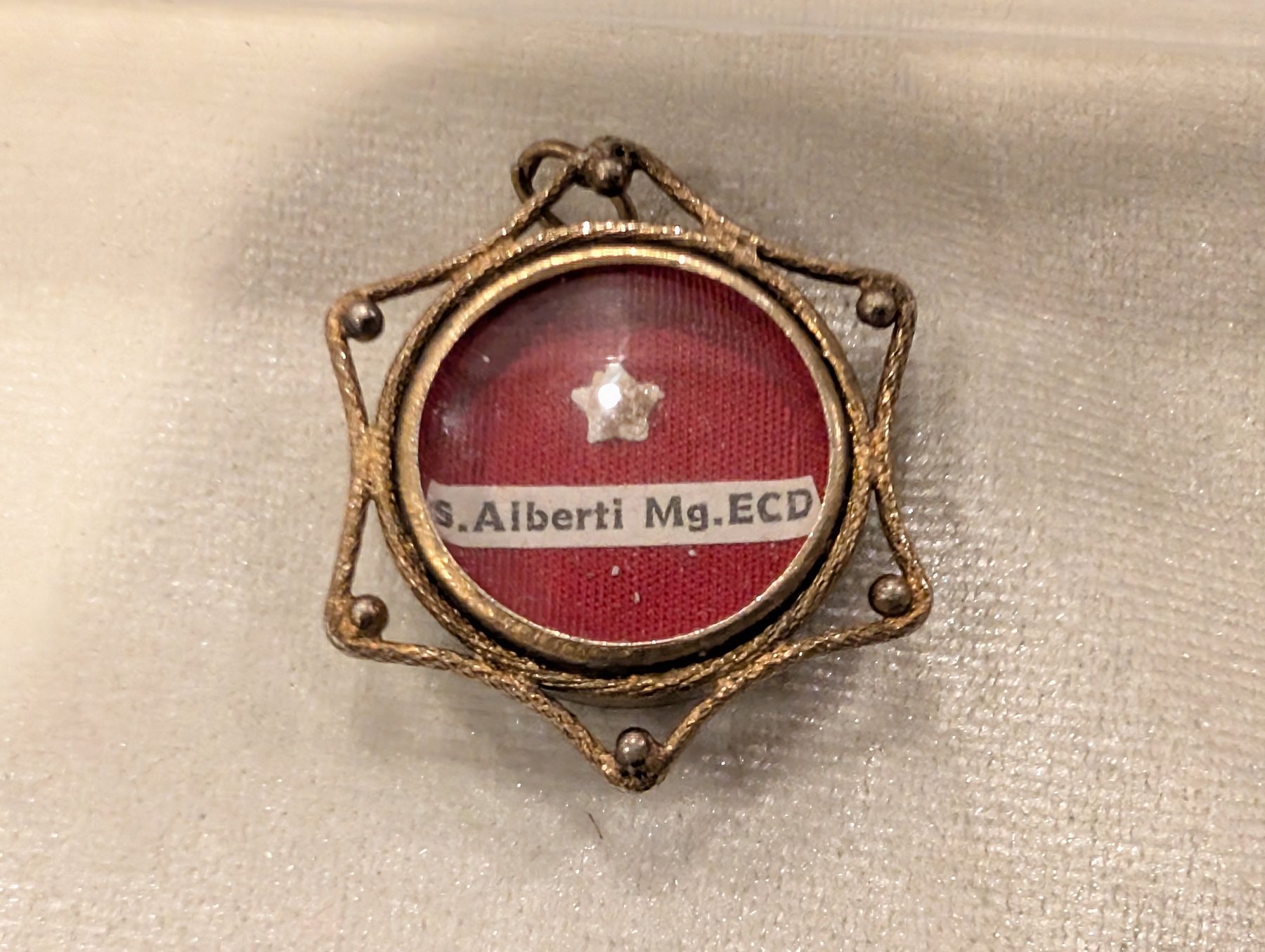
A relic of St. Albert the Great is present in the Chasing Saints Relic Collection. Private registry details, certificate IDs, provenance notes, and storage information are intentionally not shown publicly.
Reported favors