Saint profile
Martyrs of Compiègne (16 Carmelite Martyrs)
Associated with Martyrs, Religious.
Biography and devotion
Martyrs of Compiègne (16 Carmelite Martyrs): life, patronage, and devotion
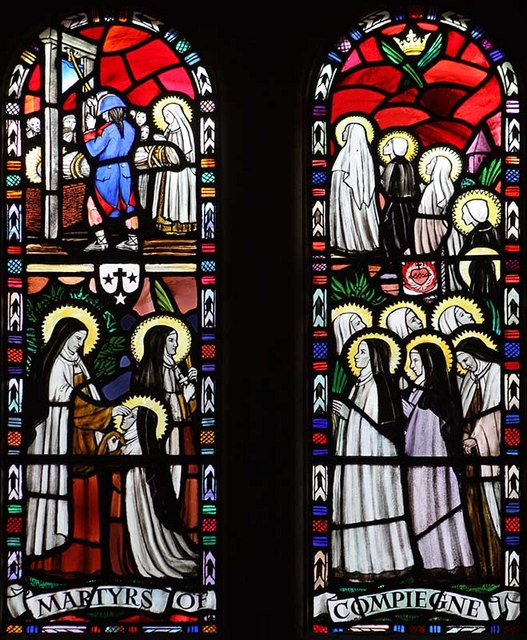
The Martyrs of Compiègne were sixteen Discalced Carmelites executed during the French Revolution. They came from the Carmel of Compiègne in France: choir nuns, lay sisters and extern sisters whose enclosed life was shattered by the anti-religious policies of the Revolution. Their dates of birth varied, but all died together on 17 July 1794 at the Place du Trône Renversé in Paris.
When religious vows were suppressed and monasteries dissolved, the sisters were forced from their convent. They continued their Carmelite life as far as possible while living in small groups. Under Mother Teresa of St. Augustine, they offered themselves to God for peace in France and for the end of the violence that was consuming the nation. They were arrested, accused of fanaticism and counter-revolutionary behavior, and condemned to death.
Their martyrdom became famous for its liturgical beauty. Taken through Paris in carts, the sisters prayed and sang. At the scaffold they renewed their vows and went to death one by one, singing as at a solemn profession. The youngest reportedly began, and Mother Teresa went last, strengthening each daughter before following them. Ten days later Robespierre fell, and the Reign of Terror collapsed.
The Carmelites were beatified by Pope St. Pius X in 1906. Four cures were accepted in connection with the beatification process, including healings of religious and clergy. In 2024 Pope Francis canonized them by equipollent canonization, recognizing the long-standing cult and heroic martyrdom of the community. Their story later inspired Gertrud von Le Fort’s novella, Georges Bernanos’ Dialogues of the Carmelites and Francis Poulenc’s opera. The martyrs are remembered because they turned fear into offering. Enclosed nuns, seemingly powerless before revolutionary violence, met death as an act of worship.
Their martyrdom also shaped modern Catholic imagination because it revealed the public power of contemplative vows. The Carmelites did not die after a life of activism; they died after years of hidden intercession. Their procession to death, singing the hymns of the Church, gave visible form to what Carmel had always been: a sacrifice of praise offered for the salvation of the world.
Relic in the Chasing Saints collection
A relic of Martyrs of Compiègne (16 Carmelite Martyrs) is present in the Chasing Saints Relic Collection. Private registry details, certificate IDs, provenance notes, and storage information are intentionally not shown publicly.
Reported favors