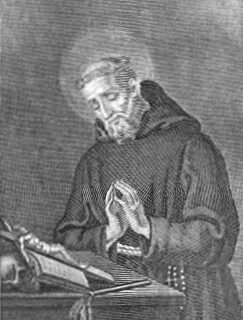
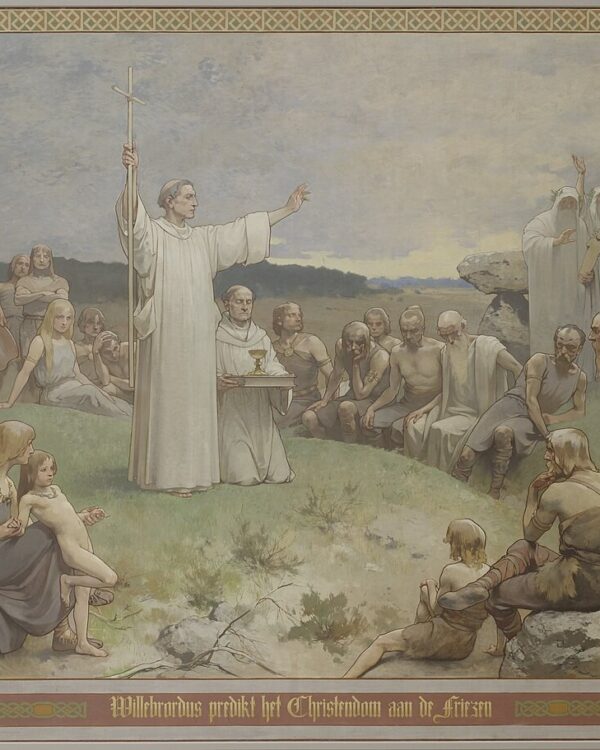
 Artwork: Georg_Sturm,_Willibrordus_predikt_het_Christendom_aan_de_Friezen.jpg. Public domain; via Wikimedia Commons. Resized for display.
In Our Relic Collection
Saint profile
St. Willibrordus
658–739
Associated with Healing, Conversion; patronage includes Frisia; missionaries.
Biography and devotion
St. Willibrordus: life, patronage, and devotion
St. Willibrord, also called Willibrordus, was an English missionary bishop born in Northumbria in 658 and dying at Echternach in 739. He is honored as the Apostle of the Frisians and patron of missionaries, the Netherlands, Luxembourg and the evangelization of northern Europe.
As a child he was entrusted to monastic formation at Ripon and later studied in Ireland, where the tradition of missionary monasticism was strong. In 690 he crossed to the Continent with companions to preach among the Frisians, whose lands lay between Frankish Christian influence and pagan resistance. His mission required political prudence as well as zeal, because the work depended partly on the changing fortunes of Frankish rulers.
Willibrord went to Rome and received papal support. Pope Sergius I consecrated him bishop and gave him the name Clement, though he remained known as Willibrord. He established his see at Utrecht and founded the monastery of Echternach, which became a lasting center of prayer, learning and missionary outreach. From there he and his companions preached, baptized, built churches and formed clergy.
His work suffered setbacks when pagan rulers regained territory, but he persevered over decades. He cooperated with other missionaries, including the wider world that later included St. Boniface. Willibrord died at Echternach, where his tomb became a place of pilgrimage. The famous dancing procession at Echternach preserves the memory of a saint whose patient missionary labor helped shape the Christian identity of the Low Countries.
His missionary style also shows the importance of Rome. By seeking papal blessing and consecration, Willibrord tied the northern missions to the wider Catholic Church rather than to a private monastic adventure. Echternach preserved his memory so strongly that pilgrimage and liturgical devotion continued long after his death. He belongs with Boniface, Columbanus, and the other missionary saints who made western Europe Christian through preaching, monasteries, books, relics, and patient formation of local clergy.
At a glance
- Life dates
- 658–739
- Feast day
- November 7
- Patronage
- Frisia; missionaries
Relic in the Chasing Saints collection
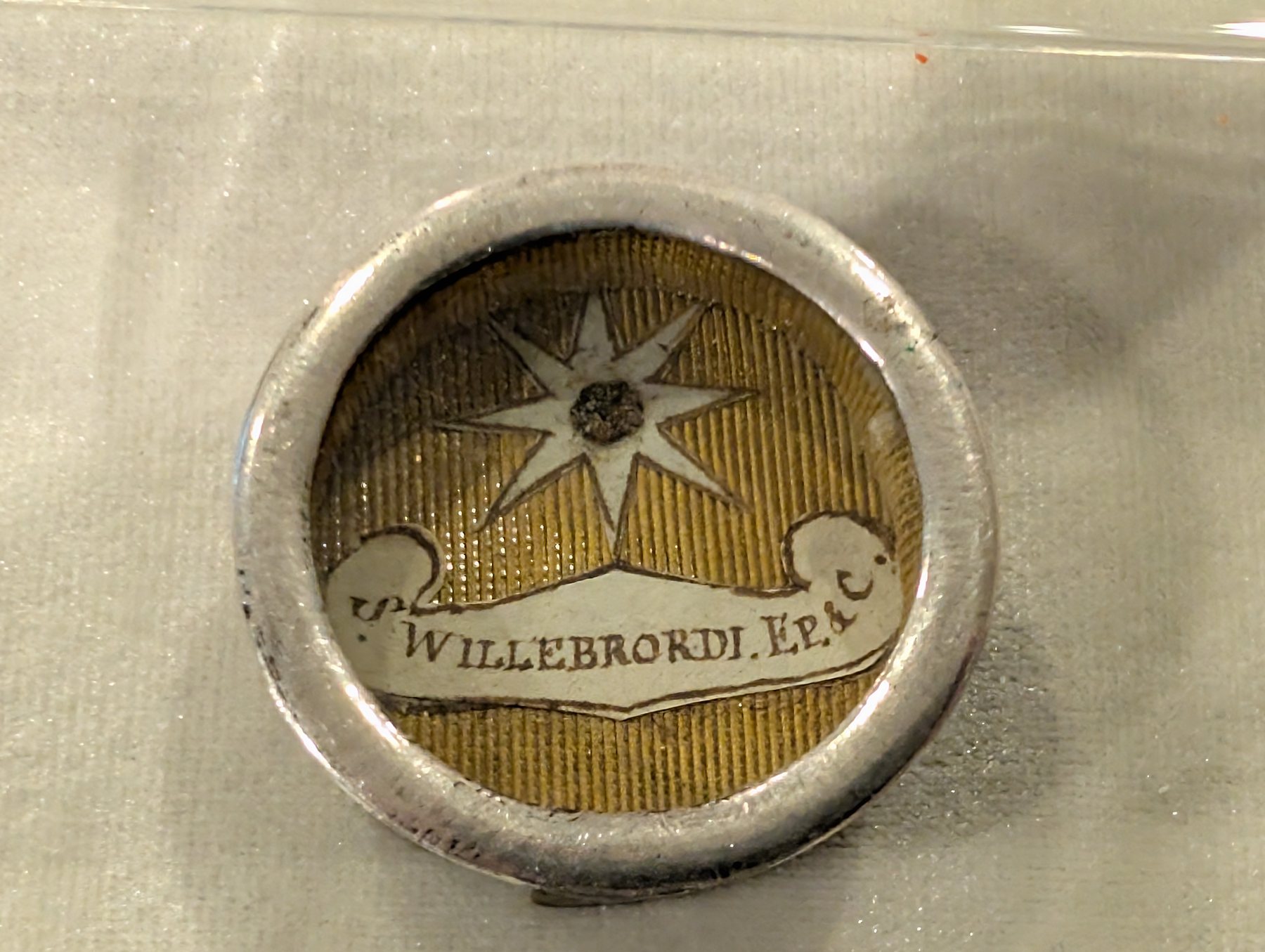
A relic of St. Willibrordus is present in the Chasing Saints Relic Collection. Private registry details, certificate IDs, provenance notes, and storage information are intentionally not shown publicly.
Reported favors