Saint profile
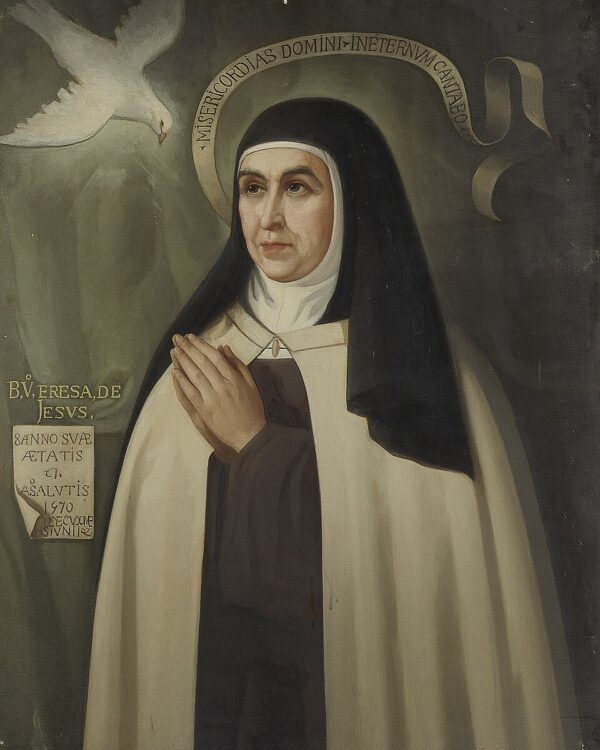
St. Teresa of Ávila
1515–1582
Associated with Doctors, Mystics, Religious, Saints; patronage includes Patron of Spain, contemplative prayer..
Biography and devotion
St. Teresa of Ávila: life, patronage, and devotion
St. Teresa of Ávila was a Spanish Carmelite nun, mystic, reformer, writer, and Doctor of the Church, born Teresa de Cepeda y Ahumada in 1515 and dying in 1582. She is honored as a saint and is patroness of Spain, contemplative prayer, reformers, and those seeking deeper union with God. Her life stands at the heart of the Catholic renewal of the sixteenth century.
Born in Ávila to a noble family, Teresa entered the Carmelite Monastery of the Incarnation. Her early religious life was sincere but uneven, and illness marked her youth. Over time, prayer drew her into profound conversion. She experienced mystical graces, including visions of Christ, intellectual visions, raptures, and the famous transverberation, in which an angel was seen piercing her heart with divine love. These gifts did not make her passive; they made her courageous.
Believing that Carmel needed a return to poverty, silence, enclosure, and continual prayer, Teresa founded the monastery of St. Joseph in Ávila in 1562. Opposition was fierce, but she continued to found reformed Carmelite houses across Spain. With St. John of the Cross, she helped establish the Discalced Carmelite reform for friars as well as nuns. Her practical intelligence, humor, and determination were as striking as her mystical gifts.
Her writings are among the great treasures of Catholic spirituality: The Life, The Way of Perfection, The Interior Castle, and Foundations. In them she teaches prayer as friendship with Christ and describes the soul’s journey toward union with God. She died at Alba de Tormes in 1582. Her body and relics became objects of devotion, and her incorrupt heart, associated with the transverberation, has been especially venerated. Proclaimed a Doctor of the Church in 1970, Teresa remains one of the greatest teachers of prayer in Catholic history.
Her foundations were not easy journeys. She traveled in poor health, faced suspicion from confessors and officials, managed practical finances, and still wrote with unmatched clarity about the highest prayer. This union of mystical experience and practical governance is one reason her teaching remains so trusted in the Church.
Her reform eventually produced a family of Discalced Carmelites whose influence reached far beyond Spain. Teresa founded convents while dealing with poor roads, illness, suspicion and financial difficulty, yet her letters show humor and common sense as much as mystical fire. This balance is essential to her profile: she was a visionary, but also a builder, traveler, writer and mother of a reform.
At a glance
- Life dates
- 1515–1582
- Feast day
- Oct 15
- Patronage
- Patron of Spain, contemplative prayer.
- Incorrupt status
- Relics are venerated at Alba de Tormes; her heart is especially associated with the transverberation tradition.
Relic in the Chasing Saints collection
A relic of St. Teresa of Ávila is present in the Chasing Saints Relic Collection. Private registry details, certificate IDs, provenance notes, and storage information are intentionally not shown publicly.
Reported favors