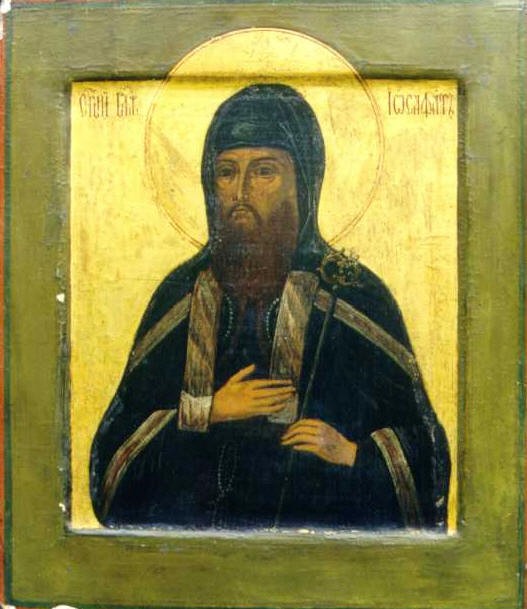
 Artwork: JKuncewicz.jpg. Public domain; via Wikimedia Commons. Resized for display.
Saint profile
St. Josaphat Kuntsevych
c. 1580–1623
Associated with Martyrs, Priests; patronage includes Christian unity; Belarus; Eastern Catholic Churches.
Biography and devotion
St. Josaphat Kuntsevych: life, patronage, and devotion
St. Josaphat Kuntsevych was born around 1580 in Volodymyr in present-day Ukraine and died a martyr in Vitebsk in 1623. A Basilian monk and Archbishop of Polotsk, he is honored as a martyr for Church unity, especially among Eastern Catholics and those who labor for reconciliation between Christians. His life belongs to the difficult history following the Union of Brest, when some Ruthenian Orthodox communities entered communion with Rome while preserving the Byzantine liturgy and discipline.
As a young man, Josaphat was drawn to prayer, fasting, the liturgy, and the monastic life. He entered the monastery of the Holy Trinity at Vilnius and became known for austerity, zeal, and love for the Church. With others, he helped renew Basilian monastic life, seeking a clergy and people rooted in prayer, catechesis, and sacramental discipline. His priestly and episcopal ministry was marked by preaching, visitation, reform of clergy, and concern that the faithful understand the unity of the Catholic Church without losing their Eastern patrimony.
This work brought fierce opposition. The religious and political tensions of the time were intense, and some viewed him as a traitor to their ancestral faith. Josaphat could be firm, even severe, in pursuing reform, yet his goal was not Latinization but communion with Rome within the Byzantine tradition. He traveled, preached, celebrated the liturgy, and tried to win people by pastoral care.
In 1623 a mob attacked the episcopal residence at Vitebsk. Josaphat faced the danger openly. He was struck, shot or beaten, and killed; his body was thrown into the river. His death shocked the region, and some of his enemies later repented. His incorrupt body became a sign of devotion and was eventually brought to Rome, where his relics are honored in St. Peter’s Basilica.
Canonized in 1867, Josaphat remains a powerful but challenging saint. He represents zeal for visible unity, fidelity to the Eastern Catholic vocation, and the costly work of reconciliation when history, politics, and religion are painfully entangled.
At a glance
- Life dates
- c. 1580–1623
- Feast day
- November 12
- Patronage
- Christian unity; Belarus; Eastern Catholic Churches
- Incorrupt status
- His body was venerated as incorrupt in Catholic tradition and his relics are honored in St. Peter’s Basilica.
Relic in the Chasing Saints collection
A relic of St. Josaphat Kuntsevych is present in the Chasing Saints Relic Collection. Private registry details, certificate IDs, provenance notes, and storage information are intentionally not shown publicly.
Reported favors