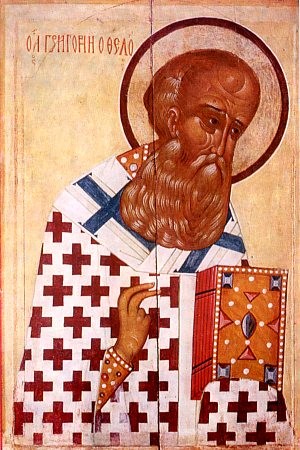
 Artwork: Gregory of Nazianzus.jpg — AnonymousUnknown author. Public domain; via Wikimedia Commons. Resized for display.
In Our Relic Collection
Saint profile
St. Gregory Nazianzen
3rd–4th c.
Associated with Protection, Martyrs, Students, Doctors; patronage includes Patron of theologians..
Biography and devotion
St. Gregory Nazianzen: life, patronage, and devotion
St. Gregory Nazianzen was born around 329 in Cappadocia and died around 390. He is honored as a bishop, Father of the Church, Doctor of the Church, and one of the greatest theologians of the Trinity. With St. Basil the Great and St. Gregory of Nyssa, he belongs to the Cappadocian Fathers, whose teaching helped the Church articulate the mystery of God against Arian and semi-Arian errors.
Gregory was born into a deeply Christian family. His father, also named Gregory, became bishop of Nazianzus, and his mother St. Nonna was revered for her faith. Educated in Caesarea, Alexandria, and Athens, Gregory formed a close friendship with St. Basil. Both men possessed brilliant minds, but Gregory’s temperament was more contemplative and reluctant toward public office. He loved study, poetry, prayer, and solitude, yet the needs of the Church repeatedly drew him into controversy.
Ordained priest by his father and later consecrated bishop, Gregory eventually came to Constantinople when the city was largely dominated by Arian influence. There he preached in a small chapel called the Anastasia. His Theological Orations defended the divinity of the Son and the Holy Spirit with such clarity that he received the title ‘The Theologian’ in the Christian East. He briefly presided at the Council of Constantinople in 381 but withdrew when disputes threatened unity and peace.
His writings include orations, letters, and poems of great theological and spiritual depth. They reveal a man wounded by ecclesiastical conflict yet faithful to the truth. Gregory died in retirement, preferring prayer and writing to power. St. Gregory Nazianzen’s greatness lies not only in his intellect but in his reverence: he taught that theology must be spoken by purified hearts, because the mystery of the Trinity is not an argument to win but the living God to adore.
His poetry also reveals the interior cost of his vocation. Gregory wrote about friendship, weariness, illness, disappointment, and desire for God with unusual candor. That personal voice helps explain his enduring appeal: the great theologian was also a wounded pastor who carried the burden of doctrine with tears, humility, and longing for contemplation.
At a glance
- Life dates
- 3rd–4th c.
- Feast day
- Jan 2
- Patronage
- Patron of theologians.
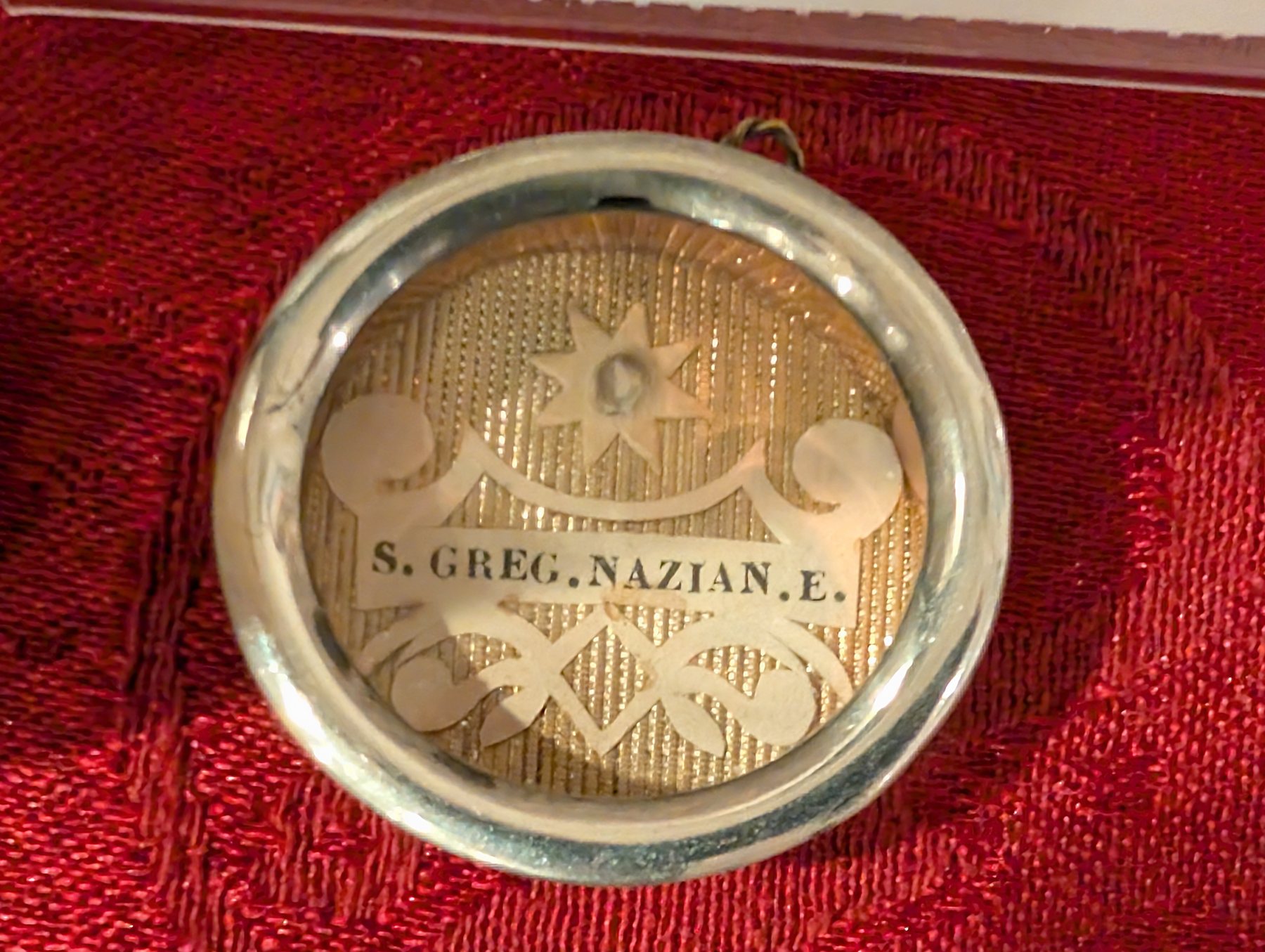
Relic in the Chasing Saints collection
A relic of St. Gregory Nazianzen is present in the Chasing Saints Relic Collection. Private registry details, certificate IDs, provenance notes, and storage information are intentionally not shown publicly.
Reported favors