Saint profile
St. Eustace
2nd century
Associated with Conversion, Martyrs; patronage includes Patron of hunters and difficult situations.
Biography and devotion
St. Eustace: life, patronage, and devotion
St. Eustace, also known as Eustachius or Eustathius, is honored as a martyr and one of the Fourteen Holy Helpers. Tradition identifies him as a Roman general named Placidus who lived in the second century and was converted through a vision of Christ while hunting. He is patron of hunters, firefighters, difficult situations, and those who suffer sudden reversals of fortune.
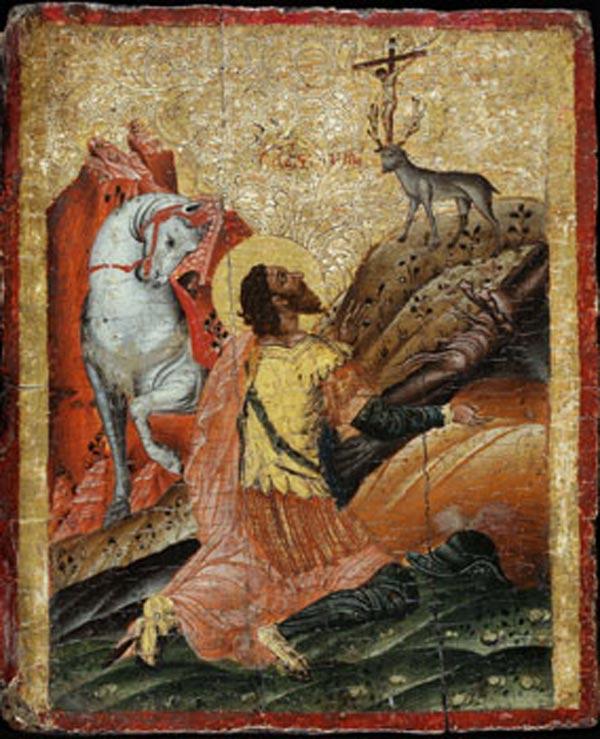
The famous story begins with a hunt. Placidus saw a stag with a shining crucifix between its antlers, and from that sign heard Christ call him to faith. He was baptized with his wife and sons and took the name Eustace. The vision did not lead to worldly ease. Tradition says he soon lost rank, property, and family, enduring exile, poverty, and separation. Like Job, he remained faithful while stripped of the things that had made him secure.
After years of hardship, Eustace was recalled to imperial service because his military skill was needed. He was reunited with his wife and sons, a joyful turn that made the later martyrdom more poignant. When ordered to offer sacrifice to the pagan gods in thanksgiving for victory, he refused. His loyalty to the emperor could not become idolatry. He and his family were condemned, and the traditional account says they were enclosed in a heated bronze bull and died praising God.
The historical details of the legend are difficult to verify, and modern calendars no longer give him the same liturgical prominence he once had. Yet medieval devotion to Eustace was immense. His image appeared frequently in art, with the stag and crucifix symbolizing the conversion of a warrior into a servant of Christ. Hunters invoked him because of the vision; those in danger invoked him because his story moved through loss, reunion, and final courage.
St. Eustace is remembered as a man whose conversion did not spare him suffering but gave meaning to it. The vision in the forest became a lifelong call: to recognize Christ in the hour of wonder and remain faithful in the hour of fire.
Because the tale joins conversion, family loss, restoration, and martyrdom, Eustace became one of the Fourteen Holy Helpers in parts of medieval devotion. Hunters saw in the stag vision a call to recognize Christ in the created world, while families in trial found in his story a saint who passed through fear, separation, and apparent ruin without abandoning God.
At a glance
- Life dates
- 2nd century
- Feast day
- September 20
- Patronage
- Patron of hunters and difficult situations
Relic in the Chasing Saints collection
A relic of St. Eustace is present in the Chasing Saints Relic Collection. Private registry details, certificate IDs, provenance notes, and storage information are intentionally not shown publicly.
Reported favors