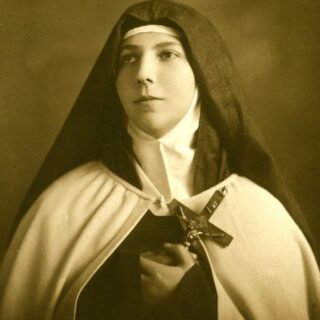
Saint profile
St. Christina the Astonishing
1150–1224
Associated with Healing, Mystics; patronage includes Mental illness; neurological disorders.
Biography and devotion
St. Christina the Astonishing: life, patronage, and devotion
St. Christina the Astonishing, also called Christina Mirabilis, was born around 1150 at Brustem near Sint-Truiden in present-day Belgium. She is one of the most unusual mystics of the Middle Ages. Her life was recorded by Thomas of Cantimpré and has been remembered with both wonder and caution because her penances and reported phenomena were extraordinary.
Christina was orphaned young and worked as a shepherdess with her sisters. Around the age of twenty-one she suffered a seizure or illness and was thought to have died. During her funeral Mass, tradition says, she suddenly rose from the coffin and flew up toward the rafters of the church. She later explained that she had been shown heaven, hell, and purgatory and had been given the choice of entering heaven or returning to suffer for the souls in purgatory. She chose to return.
After this, her life became a series of severe penances. She fled human company, saying that the smell of sin tormented her. Accounts describe her plunging into icy water, entering ovens, rolling in fires, allowing herself to be carried by mill wheels, or hanging in strange positions, yet surviving. Such stories are difficult for modern readers, but in medieval devotion they expressed a vocation of reparation for the dead and the purification of souls.
Christina was not merely a spectacle. Holy people in the region took her seriously, including figures connected with the Low Countries’ great Eucharistic and mystical flowering. In her later years she was associated with the convent of St. Catherine at Sint-Truiden, where she lived more quietly. She was sought for counsel, and her prayers were linked with healings and conversions.
She died in 1224. Her feast is kept on 24 July, and she has been invoked for those suffering mental illness, neurological disorders, and spiritual distress. Her life should not be reduced to strangeness. Beneath the astonishing signs is a fierce Catholic conviction: prayer, suffering, and love can be offered for souls in need of mercy.
The connection with St. Lutgardis is important because it shows that Christina was not merely an isolated wonder. Holy people of her own region took her seriously and tried to discern her life in the context of prayer, penance, and charity. Her extreme acts were never meant as entertainment. They were understood as a frightening sign of the seriousness of purgatory and the mercy of intercession. For that reason, she became a saint both difficult and consoling: difficult because her life unsettles easy categories, consoling because it insists that suffering can be offered for others.
At a glance
- Life dates
- 1150–1224
- Feast day
- July 24
- Patronage
- Mental illness; neurological disorders
Relic in the Chasing Saints collection
A relic of St. Christina the Astonishing is present in the Chasing Saints Relic Collection. Private registry details, certificate IDs, provenance notes, and storage information are intentionally not shown publicly.
Reported favors