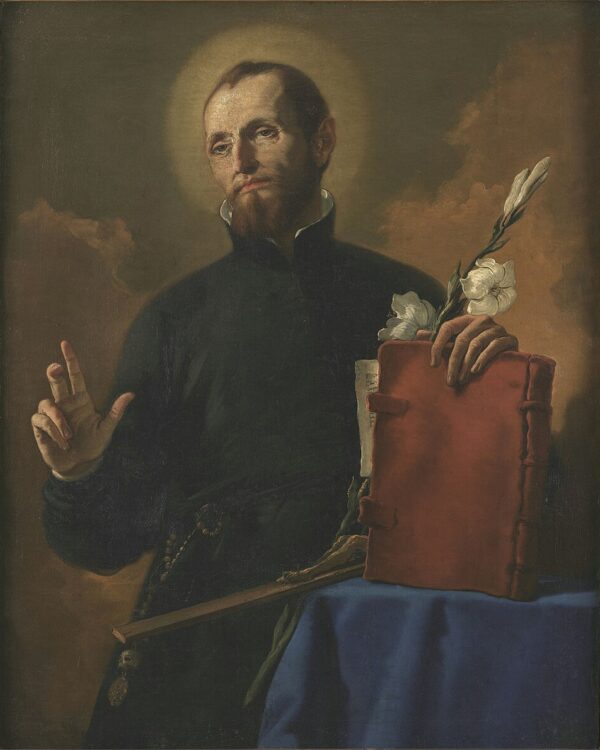
Saint profile
St. Cajetan
1480–1547
Associated with Healing, Priests, Religious, Family; patronage includes Patron of job seekers, unemployed, gamblers..
Biography and devotion
St. Cajetan: life, patronage, and devotion
St. Cajetan was born Gaetano dei Conti di Thiene in October 1480 at Vicenza in northern Italy. He is honored as a priest, reformer, co-founder of the Theatines, and patron of the unemployed, job seekers, those struggling with gambling, and people who trust in Divine Providence. His life unfolded during one of the most troubled periods before the Catholic Reformation, when the Church needed reform not only in institutions but in the personal holiness of priests.
Born into a noble family, Cajetan studied law at Padua and became a doctor of civil and canon law. He first served in the Roman Curia, where he might have made an easy ecclesiastical career. Instead, the sight of spiritual neglect and clerical worldliness moved him toward a more demanding priesthood. Ordained in 1516, he joined the Oratory of Divine Love, a reform-minded association of clergy and laity devoted to prayer, frequent Communion, service to the sick, and renewal of Christian life.
His charity was practical. He worked among the incurably ill, helped establish or reform hospitals, and cared for poor people whose suffering was often ignored. Cajetan also became concerned about usury and the crushing burden placed on the poor by exploitative lenders. In Naples he encouraged charitable credit institutions that could offer help without destroying families through debt, a concern that later became linked with his patronage of those in financial distress and unemployment.
In 1524 he helped found the Clerics Regular, later known as the Theatines, with Gian Pietro Carafa, who would become Pope Paul IV, along with Paolo Consiglieri and Bonifacio da Colle. The new community sought to renew the clergy through poverty, common life, dignified worship, preaching, and radical trust in Providence. Theatines were not meant to be comfortable church officials; they were to be priests visibly conformed to Christ, available for reform, prayer, and care of souls.
The sack of Rome in 1527 brought imprisonment, suffering, and danger. Cajetan and his companions eventually escaped to Venice, where he continued his work. He later labored in Naples, founding a Theatine house and serving a city wounded by poverty and disorder. A tender tradition tells that on Christmas night he received a mystical grace in which the Blessed Virgin Mary placed the Infant Jesus in his arms. The story reflects the heart of his reform: trust in the poverty of Bethlehem, reverence for the Eucharist, and love for Christ among the poor.
Cajetan died in Naples on 7 August 1547 and was canonized in 1671. His body is venerated at San Paolo Maggiore in Naples. He remains a saint of reform without bitterness, poverty without despair, and trust without passivity. He worked to renew priests, protect the poor, and teach the faithful that Divine Providence is not an excuse for idleness but a call to serve courageously when human security fails.
At a glance
- Life dates
- 1480–1547
- Feast day
- Aug 7
- Patronage
- Patron of job seekers, unemployed, gamblers.
Relic in the Chasing Saints collection
A relic of St. Cajetan is present in the Chasing Saints Relic Collection. Private registry details, certificate IDs, provenance notes, and storage information are intentionally not shown publicly.
Reported favors