Saint profile
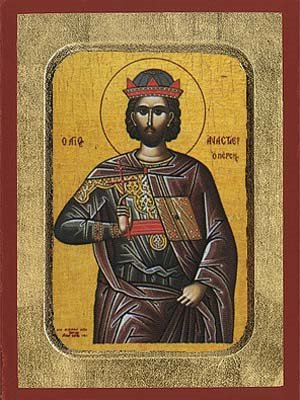
St. Anastasius the Persian
d. 628
Associated with Conversion, Protection, Martyrs, Religious.
Biography and devotion
St. Anastasius the Persian: life, patronage, and devotion
St. Anastasius the Persian was born in the Persian Empire and died as a martyr in 628. Before his conversion he was known as Magundat and served as a soldier. His life crossed the great conflict between Persia and the Christian Roman world, but his sanctity came from a personal surrender to Christ. The turning point was his contact with the relic of the True Cross, which the Persians had taken from Jerusalem in the early seventh century. The reverence shown to the Cross awakened his curiosity and drew him toward the Christian faith. He left military life, received baptism, and took the name Anastasius. Afterward he became a monk near Jerusalem, embracing prayer, penance, and obedience. His conversion was not only private devotion; it placed him in danger. During renewed conflict, Anastasius was captured and pressured to abandon Christianity. He refused. The accounts of his passion describe imprisonment, torture, and repeated attempts to make him return to Persian religious practice. He remained steadfast and was eventually strangled and beheaded with companions. His relics were honored in the Christian world, and devotion to him spread in both East and West. He has long been invoked against headaches, a patronage likely connected with the manner of his suffering and the veneration of his head as a relic. The life of Anastasius is important because it shows a soldier transformed by the mystery of the Cross. He had known imperial service and the discipline of arms, but he found a greater loyalty in Christ. His martyrdom joined the history of the True Cross to the witness of a convert who accepted suffering rather than deny the faith he had discovered.
His relics were eventually brought into Christian territories, and devotion to him spread far beyond the place of his martyrdom. In the West he became known through relic veneration and the belief that his intercession aided sufferers of headaches and mental affliction. The detail is important because it shows how a martyr from Persia became part of the devotional life of distant Christian communities. His story also stands near the dramatic recovery of the True Cross by Emperor Heraclius, making him a saint whose conversion and martyrdom were bound to the triumph of the Cross in the seventh century.
At a glance
- Life dates
- d. 628
- Feast day
- Jan 22
Relic in the Chasing Saints collection
A relic of St. Anastasius the Persian is present in the Chasing Saints Relic Collection. Private registry details, certificate IDs, provenance notes, and storage information are intentionally not shown publicly.
Reported favors