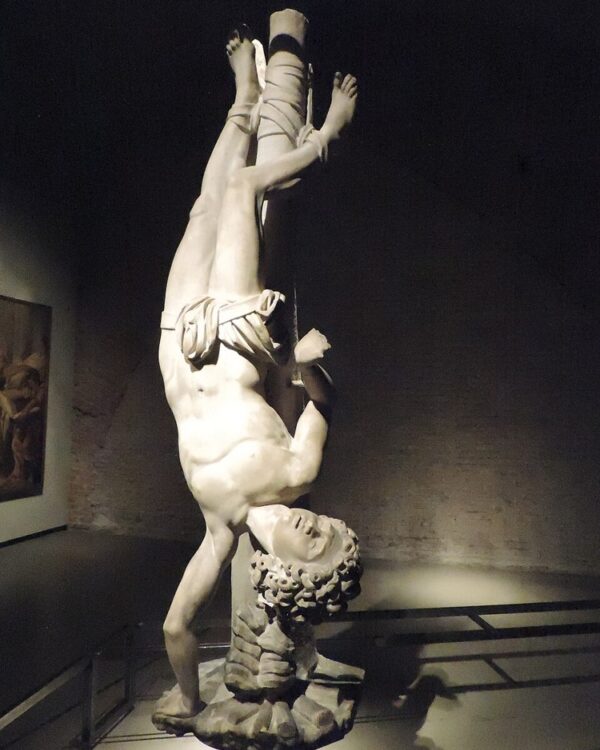
 Artwork: Museo_del_Duomo_-_Milan_-_St_Agapitus_-_Marco_Antonio_Prestinari_(1605-1607).jpg — Vassia Atanassova - Spiritia. CC BY-SA 4.0; via Wikimedia Commons. Resized for display.
Saint profile
St. Agapitus
3rd c.
Associated with Healing, Martyrs, Children; patronage includes Martyr of Palestrina; patron of Palestrina..
Biography and devotion
St. Agapitus: life, patronage, and devotion
St. Agapitus, also called Agapetus or Agapito, is honored as a youthful martyr of Palestrina in Italy. Tradition places his death in the third century, often during the persecution under Emperor Aurelian around 274. His cult became especially important in Palestrina, where he has long been venerated as patron.
The accounts remember Agapitus as very young, sometimes about fifteen years old, when he was arrested for being a Christian. The authorities attempted to force him to sacrifice to the pagan gods. When he refused, he endured torture and was condemned to death. Some traditions describe him being exposed to wild beasts or tortured before finally being beheaded. The details vary, but the central memory is consistent: a young Christian remained faithful under imperial pressure and died rather than deny Christ.
The devotion to Agapitus became part of the religious identity of Palestrina. His relics and feast shaped local worship, and his name remained associated with youthful courage. Like St. Agnes of Rome and other young martyrs, he shows that holiness in the early Church was not limited by age. A teenager could confess Christ with the strength of a seasoned ascetic when grace made the heart firm.
A public profile should avoid confusing him with other saints named Agapitus, including bishops and confessors.
His youth should be emphasized without sentimentalizing it. The ancient Church remembered young martyrs because their courage overturned ordinary expectations. A boy with no civil power, no office, and no military strength could shame judges by confessing Christ with a freedom they could not control.
His shrine and local feast helped keep that memory alive in Palestrina. For visitors, the important details are his youth, his refusal of pagan sacrifice, his suffering under persecution, and the way a local church preserved his name as a patron and intercessor.
At a glance
- Life dates
- 3rd c.
- Feast day
- August 18
- Patronage
- Martyr of Palestrina; patron of Palestrina.
Relic in the Chasing Saints collection
A relic of St. Agapitus is present in the Chasing Saints Relic Collection. Private registry details, certificate IDs, provenance notes, and storage information are intentionally not shown publicly.
Reported favors